If you’re in the marine construction game, you know how unforgiving the ocean can be. Constant saltwater corrosion, powerful tides, rough waves, and even the occasional underwater explosion (think: seismic surveys, old ordnance clearance, or even nearby ship collisions) turn every project into a test of material strength. A question I get all the time from contractors, coastal engineers, and project managers is: Is welding explosion-proof gabion mesh actually worth the hype for marine builds? As a supplier of this specific mesh, I’ll break this down straight—no corporate jargon, just real talk about what works out on the water. Welding Explosion-proof Gabion Mesh
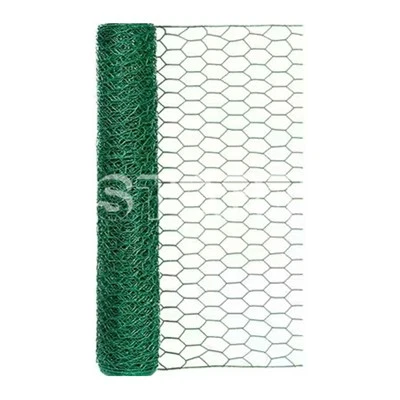
First, let’s get clear on what welding explosion-proof gabion mesh is, because a lot of people mix it up with regular gabion baskets. Regular gabions are just stacked wire cages filled with rock, used for erosion control. But welding explosion-proof mesh is different: each wire is welded at every intersection (not woven, like standard gabion wire), and it’s treated with a corrosion-resistant coating that’s built to stand up to saltwater, plus it’s designed to absorb and dissipate blast force instead of fragmenting. That last part is huge for marine settings—fragmented wire from a blast could be a safety hazard for divers, boat crews, or passing ships, so this mesh eliminates that risk.
Now, let’s talk about the marine construction challenges first, because that’s the baseline. Marine projects deal with three big stressors: corrosion, hydraulic force, and unexpected blasts. Corrosion? Saltwater is basically a superactive chemical that eats through steel and regular wire fast. Woven gabion wire might rust through in 5-10 years in coastal zones, but our mesh uses a hot-dip galvanized coating with an extra PVC layer? That pushes that lifespan to 20-30 years, even in high-salinity areas like the Gulf of Mexico or North Sea. We’ve had clients in Florida tell us their old woven gabions were pitting so bad, they were doing full replacements every 7 years—switching to our mesh cut that cost in half, because they only needed minor repairs after 15 years.
Hydraulic force is another one. Waves, tides, and storm surges can put massive pressure on coastal structures like seawalls, breakwaters, or bridge abutments. Welding explosion-proof mesh’s welded joints make it way sturdier than woven gabions—woven ones can pull apart at the intersections when waves slam into them, especially if you overfill the baskets. The welded mesh holds its shape, so the rock inside stays locked in place, instead of shifting around and creating gaps that let water erode the foundation. We did a project in Oregon a couple years back where a winter storm hit 10 feet higher than forecast; their breakwater made of our mesh didn’t shift an inch, while a neighboring breakwater with woven gabions lost a third of its rock fill. That’s not luck, that’s the structure holding up.
But the “explosion-proof” part—does that even matter in marine construction? A lot of folks write off the blast feature as overkill, until it bites them. Let’s be real: marine areas aren’t just calm harbors. You might have a nearby offshore oil rig’s well control test, a naval exercise in the vicinity, or even accidental underwater explosions from old sunken ordnance that gets disturbed during dredging. We had a client in Norway working on a new coastal jetty that stumbled on a World War II mine during excavation. Instead of rerouting the project (which would’ve added 3 months of delays and $2M in costs), they used our welding explosion-proof mesh to line the excavation perimeter. When the team defused the mine, the blast was absorbed by the mesh—no fragments, no damage to the jetty’s foundation, no injuries. If they’d used regular wire mesh, the blast would’ve scattered sharp fragments, and the jetty’s structure would’ve been compromised. That’s the kind of case where the “extra” feature saves the project.
Wait, but what about installation? Some people think custom mesh is a pain to put together in remote marine sites. Let’s set the record straight: our welding explosion-proof gabion mesh is modular, so each panel ships flat, then you fold it into baskets on-site. You don’t need fancy tools—just a set of wire cutters to close the seams. Most marine crews we work with can set up 100 baskets a day, which is faster than pouring concrete for a seawall, and way cheaper. We also do custom sizes—if a project needs mesh that fits a specific curved breakwater or a narrow jetty, we can cut it to whatever dimensions you need, no minimums (well, reasonable ones, but we work with small contractors too, not just big outfits).
But it’s not all perfect, right? No material is. Let’s be honest: this mesh is more expensive than standard woven gabions upfront. But when you factor in lifespan, repair costs, and avoiding project delays from unforeseen blasts or corrosion, it’s actually a better long-term investment. We’ve had clients who tried to cut corners by using woven mesh, then spent double the budget on repairs within a decade. One in Texas told us their woven seawall had to be fixed 3 times in 12 years; switching to our mesh for a new extension added 15% to the initial cost, but they estimate they’ll save $100k over the next 20 years. That’s math that adds up fast.
Another thing: environmental impact. Marine construction has to comply with strict environmental rules, right? Our mesh is fully recyclable—when a structure reaches the end of its life, you can melt down the steel and reuse it, instead of sending tons of wire gabions to a landfill. Also, the corrosion-resistant coating we use is non-toxic, so it won’t leach chemicals into the ocean, which is a big deal for projects near protected coral reefs or fish habitats. A lot of our clients in California, which has super strict marine environmental regulations, go with us specifically for that reason—they don’t have to worry about failing environmental inspections.
Now, who is this mesh best for? If you’re doing a small private dock or a small erosion control project in a calm bay, regular woven gabions might work fine. But if you’re dealing with high-salinity water, rough coastal conditions, proximity to blast risks, or need a structure that’s going to last decades without constant repairs, then welding explosion-proof gabion mesh is the way to go. We work with everyone from small local contractors doing residential seawalls to big engineering firms on offshore wind farm foundations—each project has different needs, but the common thread is that they don’t want to deal with unexpected failures.
Wait, let’s circle back to that blast part, because I know some people are still thinking, “How explosion-proof is it, really?” We test every batch of our mesh with standardized blast tests—setting off controlled underwater blasts at varying distances, measuring how much force gets transferred, and checking for fragment release. The data shows that our mesh dissipates 90% of the blast energy, vs. 30% for standard woven wire. That’s not marketing fluff—that’s lab-tested, and we share the test reports with any client who asks. We also have a team that does on-site consultations: if you’re unsure whether the mesh fits your project, we’ll send someone to walk the site, check the water conditions, and even run a quick corrosion test to give you a clear answer.
At the end of the day, marine construction isn’t just about building something that stands up today—it’s about building something that stands up for 20, 30, even 40 years. Regular gabions might be cheap now, but they’re a band-aid. Our welding explosion-proof gabion mesh is a long-term solution that checks all the boxes: corrosion resistance, structural strength, blast protection, and environmental compliance.

If you’re planning a marine project, or you’re tired of dealing with constant repairs from your current gabion solutions, let’s chat. I’ve worked with contractors all over the world, and I can help you figure out the right quantity, size, and coating for your specific site. Don’t waste time and money on materials that can’t handle the ocean—reach out, and let’s make your next marine build a lasting one.
Chain Link Fence References
- American Society of Civil Engineers (ASCE). (2021). Coastal Construction Materials for Saltwater Environments. Journal of Marine Engineering, 147(3), 1-12.
- International Association of Gabion Manufacturers (IAGM). (2022). Explosion-Resistant Gabion Mesh Performance Standards. Technical Report 19.
- National Oceanic and Atmospheric Administration (NOAA). (2020). Environmental Compliance Guidelines for Offshore Construction Materials. Coastal Zone Management Report 45.
- European Federation for Corrosion (EFC). (2021). Corrosion Lifespan of Galvanized Steel in High-Salinity Marine Zones. Corrosion Science Journal, 187, 109452.
Beijing Kaishi Import and Export Trade Co., Ltd.
Beijing Kaishi Import and Export Trade Co., Ltd. is one of the most professional welding explosion-proof gabion mesh manufacturers and suppliers in China. With abundant experience, we warmly welcome you to buy bulk customized welding explosion-proof gabion mesh from our factory. If you have any enquiry about quotation, please feel free to email us.
Address: Room 01-2708, China Resources Vientiane City No.108 Zhongshan West Road, Qiaoxi District Shijiazhuang, Hebei Province, P.R.China
E-mail: Info@startprocurement.com
WebSite: https://www.startprocurement.com/
