If you’ve ever stood on a substation floor watching a technician run a tan delta test on a power transformer, you know it’s equal parts art and science. As a supplier of transformer tan delta testers, I’ve walked hundreds of technicians through the process of connecting our equipment, and I can tell you the number one mistake people make isn’t in the test itself—it’s skipping the critical prep work before touching a single lead. Let me walk you through exactly how to connect a transformer tan delta tester to a transformer, share the lessons I’ve learned from years on job sites, and help you avoid the missteps that turn a routine test into a headache. Transformer Tan Delta Tester
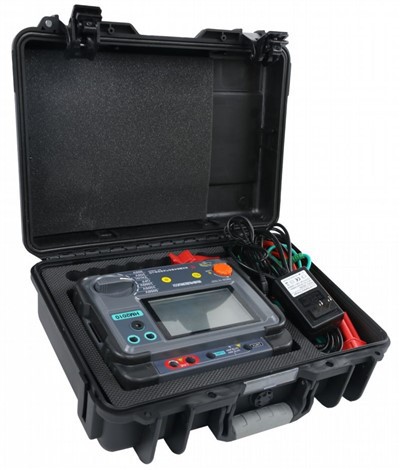
First, let’s get one thing straight: a tan delta test measures the insulation quality of a transformer windings. It calculates the dissipation factor (tan δ, or tangent delta) which tells you how much of the electrical energy applied to the windings is lost as heat instead of being stored in the insulation. A healthy transformer will have a low, consistent tan delta value; a faulty one will have a high, inconsistent value, often a sign of moisture, contamination, or aging insulation. That’s why doing the test right starts with safety, because you’re dealing with a de-energized transformer that still holds a residual charge—and a tester that runs high voltage, enough to do serious harm if connected wrong.
Before you even pull your tester out of its carrying case, stop. I can’t tell you how many times a tech has rushed to connect leads, only to realize they skipped a critical step. First, confirm the transformer is 100% de-energized. Lockout/tagout (LOTO) is non-negotiable here, no exceptions. The substation’s main breaker for the transformer should be locked open, and the tag signed by the team working on the unit. Next, test the bushing terminals with a non-contact voltage tester to make sure there’s no residual charge. Even if the transformer was de-energized for days, large units can hold a static charge that will shock you. Wait, I’ve had a tech tell me, it’s just a small charge. Last year, one of our service reps was on a job where a 10-year-old transformer held a 2,000V residual charge long after the breaker was pulled. That charge knocked him off a ladder, and he’s lucky he didn’t get hurt worse. Prep isn’t a suggestion—it’s how you go home at the end of the day.
Now, let’s talk about the equipment. A quality transformer tan delta tester will come with a set of heavy-duty, shielded test leads, a high-voltage test probe, a ground lead, and a set of bushing adapters for different sized terminals. Skip the cheap third-party leads I’ve seen some guys buy—they’re not shielded, so you’ll get bad data from electrical noise, and they can break mid-test, leaving you exposed. Our testers come with leads rated for 15,000V, which is standard for transformer tests, and we also offer bushing adapters for both live-front and dead-front transformers, since no two units are built exactly alike. Also, before you start, do a quick self-test on your tester. Most modern testers have a built-in diagnostic function that checks the leads for continuity and shielding. Run that now—if the leads are faulty, you’ll waste time connecting everything only to get an invalid result, and you’ll have to go back out to replace them.
With safety checks done and tester verified, it’s time to connect the leads. This is where a lot of guys get confused, because there’s no one-size-fits-all setup—it depends on the type of transformer, the test being run, and whether you’re testing a single phase or the entire unit. Let’s break down the most common scenario: testing a three-phase transformer’s high-voltage (HV) windings to ground, which is the standard tan delta test for routine maintenance.
First, locate the three HV bushing terminals on the transformer. They’re usually marked A, B, C, sometimes with an N for neutral, depending on the unit. Now, here’s a key rule: always connect the tester’s low-voltage (LV) lead to the grounded terminal first. Wait a second, the high-voltage lead doesn’t go on a grounded terminal? No, not for this test. The tan delta tester works by applying a known AC voltage to one winding (the test winding) and measuring the current that flows through the insulation to ground. So in this setup, the test winding is one phase of the HV windings, and the ground is the transformer’s tank, which is permanently grounded.
Start with the ground lead. Find a clean, uncorroded spot on the transformer’s tank—avoid rust, paint, or dirt, because that will create a bad connection that skews results. Scrape a 2-inch spot with a flat screwdriver until you see bright metal, then clamp the tester’s heavy ground lead to that spot. I always tell techs to wiggle the clamp after tightening it—if it moves or feels loose, scrape a new spot. A bad ground is the #1 cause of invalid tan delta results, second only to human error.
Next, connect the tester’s LV lead to the transformer’s neutral (N) terminal, if it’s accessible. Wait, what if there’s no neutral terminal? No problem. If the transformer is a delta-wye unit, the wye neutral is almost always grounded, and that’s your LV connection. If the neutral isn’t grounded, you can connect the LV lead to the low-voltage winding’s common terminal, but that’s a more advanced test—for routine maintenance, always use the neutral. The LV lead is the return path for the current, so it doesn’t carry high voltage, but it still needs a solid connection. Once that’s tight, move to the HV lead.
The HV lead connects to the phase terminal you’re testing first—let’s say phase A. Loosen the terminal’s bolt just enough to slip the lead’s ring terminal over it, then tighten it firmly. Don’t over-tighten, though—you can strip the bolt, and then you’re stuck with a damaged terminal on a transformer that’s already de-energized. Once phase A is connected, you’ll do the test, then repeat the process for phase B and phase C, right? Wait, no—some guys connect all three HV leads at once, and that works, but I recommend testing each phase individually for small transformers, because parallel capacitances between phases can cause minor errors. For large, medium-voltage transformers, testing all three at once is fine, but always check your tester’s manual—different models have different settings for multi-phase testing.
Now, what if you’re testing a dead-front transformer, the kind where the bushing terminals are inside a metal box instead of exposed? That’s a common scenario for newer substation transformers, and it adds a small step. You’ll need to open the bushing box, which usually requires a socket wrench, and make sure the box is grounded to prevent static buildup. When you connect the leads, make sure the lead doesn’t touch the inside of the metal box or any other terminals while you’re connecting—even a quick brush will cause a short circuit, which can damage your tester. I always keep a small piece of rubber mat in my tool bag for these jobs; I lay it over the bushing box opening as I work, so the leads can’t touch the metal.
What about other tests, like testing the low-voltage windings or testing the windings as a whole? The process is similar, just reversed. If you’re testing the LV windings, you’ll connect the HV lead to the LV terminals, and the LV lead to the tank ground. The key is always referencing the tester’s polarity: never mix up the HV and LV leads. One time, a tech who’d been working on LV wiring all day flipped the leads when testing HV windings, and his tester displayed an error code that he didn’t recognize. He wasted 2 hours troubleshooting before we walked him through the setup. Always double-check the lead labels—our testers have color-coded leads, red for HV, black for ground, and blue for LV, to make it harder to mix up.
Wait, another common mistake: not accounting for external capacitance. If the transformer is connected to other equipment, like switchgear or a nearby bus, those will add capacitance to the circuit, which can throw off tan delta readings. That’s called external interference, and it’s a big problem on transformers that are part of an active substation, even when they’re de-energized. How do you fix that? When you connect the HV lead to the test phase, also connect a temporary shield lead from the tester’s shield terminal to the adjacent phase terminals. That diverts the external capacitance away from the test circuit, giving you an accurate reading. Our testers include shield leads with every unit for exactly this scenario, and we include a cheat sheet with the cheat sheet that walks you through adding shields for different transformer types.
Once all leads are connected, take one more minute to do a visual check. Is the ground lead clamped to clean metal? Are all lead connections tight? Is the HV lead’s ring terminal fully seated on the terminal, not touching any other parts? Any loose connection here will give you a bad result, and you’ll have to come back later to re-test. When in doubt, double-check. I’ve heard horror stories of teams testing for half a day, only to realize a lead was loose, and the entire test was invalid. Don’t be that team.
Now, before you energize the tester, confirm the tester’s settings. The voltage setting should match your transformer’s class—most routine tests use 10kV or 15kV, which is standard for distribution and medium-voltage power transformers. Don’t use a higher voltage than needed; that can damage old insulation, and it’s unnecessary for a routine test. Also, set the test duration: most modern testers can run a 1-minute test, which is enough for routine maintenance, but you can run a 10-minute test for more sensitive readings if you suspect insulation damage.
When you run the test, stand back from the transformer and the tester. Don’t touch any leads or terminals while the tester is running, even if it looks like it’s not doing anything. The high voltage can arc, and even a small arc will injure you. Once the test is done, de-energize the tester, wait 5 minutes for any residual charge to dissipate, then disconnect the leads. Always disconnect the HV lead first, then the LV lead, then the ground lead. Disconnecting ground last is another common mistake—if you disconnect the HV lead first while it’s still energized, that’s a shock hazard. Take it slow, follow the order, and you’ll be fine.
I’ve been in this industry for over 12 years, selling and servicing tan delta testers, and the biggest piece of advice I can give is this: the connection process isn’t rocket science, but it’s precise. Every connection, every step, is designed to eliminate variables that will skew your results or put you at risk. I’ve seen techs skip LOTO and get shocked, I’ve seen teams mix up leads and get wrong readings that led to unnecessary transformer replacements, I’ve seen guys use old, damaged leads that broke mid-test. All of these are avoidable if you take the time to prep, check, and double-check every step.
At our company, we don’t just sell tan delta testers—we provide on-site training for every customer, because we know that even the best tester is useless if you don’t know how to use it. We’ve built our testers to be user-friendly, with clear displays and built-in error alerts that warn you if a connection is loose, but no machine can replace a technician who takes pride in doing the job right. If you’re in the market for a tan delta tester, don’t just look for the cheapest option. Look for a supplier that stands behind their product, that offers support when you run into a question, that provides the tools and guidance you need to do the job safely and accurately.
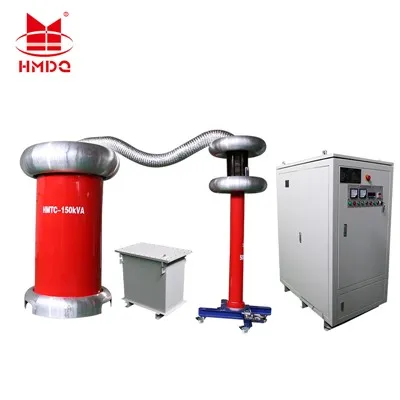
Connecting a transformer tan delta tester is a process that, when done correctly, gives you peace of mind that your transformer is in good shape, or alerts you to a problem before it becomes a catastrophic failure. It’s not a step to rush through, it’s the foundation of a reliable test. If you have questions about the process, or if you’re ready to upgrade your test equipment, don’t hesitate to reach out to our team to discuss your needs and find the right solution for your operation.
Transformer Oil Purifier References
IEEE Std 62-2015, IEEE Guide for Diagnostic Field Testing of Electric Power Apparatus – Fluid-Filled Power Transformers, Regulators, and Reactors.
ASTM D150-18, Standard Test Method for AC Loss Characteristics and Permittivity (Dielectric Constant) of Solid Electrical Insulating Materials.
National Electrical Code (NEC) Article 450, Transformers.
Occupational Safety and Health Administration (OSHA) Standard 1910.147, Control of Hazardous Energy (Lockout/Tagout).
Wuhan Goldhome Hipot Electrical Co., Ltd.
Wuhan Goldhome Hipot Electrical Co., Ltd. is one of the most professional transformer tan delta tester manufacturers and suppliers in China, featured by quality products and good price. Welcome to buy transformer tan delta tester in stock here and get pricelist from our factory. Contact us for customized service.
Address: A25 Huading Industrial Park, Wuhan Economic and Technological Development Zone, Hubei Province
E-mail: sales@goldhomehipot.com
WebSite: https://www.goldhomehipot.com/
