If you’ve ever considered getting a dermal anchor—those tiny, surgical-grade implants that let you place a single piercing anywhere on your body, from your collarbone to the back of your neck—you’ve probably wondered how they hold up over time. As a dermal anchor supplier who’s worked with studios, body modifiers, and people getting their first permanent piercing for over a decade, I get this question nonstop: Do dermal anchors fade, shift, or break down years after they’re placed? It’s not a simple yes or no, and the answer matters whether you’re a client choosing a permanent piercing or a studio vetting quality materials for your clients. Let’s break down what actually happens, what you need to watch for, and how quality products make all the difference. Dermal Anchors
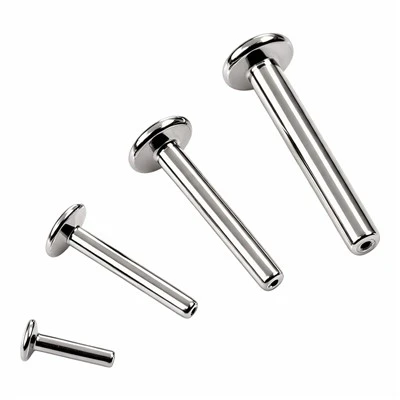
First, let’s clarify what a dermal anchor is, because the word “fade” often gets thrown around loosely. A dermal anchor isn’t a decorative piece—it’s the base of the piercing, implanted under the top layer of skin (the epidermis) and sitting just above the dermis, where it integrates with your body’s tissue. The visible top part (the “bead” or decorative end) screws onto this base. So when people ask if dermal anchors fade, they’re usually asking two things: Do the materials break down and disappear, or does the visible portion lose its shine, color, or hold?
Let’s start with material science, because that’s the biggest factor in how an anchor holds up. Most high-quality dermal anchors are made from three materials: surgical-grade titanium, medical-grade stainless steel, or PEEK (polyether ether ketone), a high-performance plastic used in orthopedic implants. Cheap knockoffs might use nickel-plated steel or even low-grade plastic, which is where a lot of the “fading” issues come from. Nickel, for example, is a common irritant, and over time, it can corrode when exposed to sweat, lotions, or skin oils. That corrosion looks like a dull, discolored spot on the surface of the anchor, and in some cases, it can cause the skin around the piercing to get inflamed or reject the implant.
Titanium is the gold standard for dermal anchors, and for good reason. It’s biocompatible, meaning your body doesn’t view it as a foreign object (well, not in a bad way). Your skin grows around titanium anchors, creating a secure pocket that holds them in place for decades. I’ve seen clients who’ve had titanium dermal anchors for 15+ years with zero visible fading—their decorative beads still shine, and the anchor hasn’t shifted or broken down. That said, even titanium can show wear if you’re not careful about aftercare. Let’s say you get an anchor on your hand, and you’re constantly washing it with harsh soap, using hand sanitizer with alcohol, or working out in a pool with chlorine every day. Over time, that exposure can dull the polished surface of the titanium bead, making it look less shiny than when you first got it. It’s not the anchor fading; it’s surface wear from daily use.
Another material to consider is PEEK, which is often used for people who have metal allergies. PEEK is also biocompatible, and it’s resistant to corrosion, but it’s more flexible than titanium. That means it can sometimes shift if you’re putting a lot of pressure on the area—like if you sleep on an anchor on your shoulder every night, or work with your hands a lot. I’ve had clients with PEEK anchors say they noticed a small shift after 2-3 years, but that’s not the anchor fading—it’s the tissue around it adapting, or the implant moving slightly under repeated pressure. In most cases, you can get a small touch-up to reposition the decorative bead without replacing the entire anchor.
Now, what about skin rejection? A lot of people confuse rejection with fading. Rejection happens when your body pushes the implant out, usually because the anchor is too large for the site, or the aftercare was poor, or the studio didn’t place it correctly. A rejected anchor won’t fade—it will actually work its way out, often over a few months. For example, if you get a dermal anchor on your upper back, and a studio places too much of the base under the skin, your body might try to expel it. But that’s a placement issue, not a flaw in the anchor itself. As a supplier, we work with studios to educate them on proper placement techniques, because a well-placed anchor has a rejection rate of less than 5% over 10 years, while a poorly placed one can have a rejection rate as high as 20%.
There’s also the myth that dermal anchors fade because the base breaks down. That’s not true for high-quality materials. Titanium and PEEK are designed to be stable for decades. The only time a base breaks down is if someone buys a cheap, untested anchor. Last year, we had a client who came to us with a dermal anchor they’d gotten from a pop-up piercing shop for $20. The base was made of a low-grade steel that corroded so badly after 18 months that the decorative bead fell off, and the skin around the piercing was infected. We worked with them to replace it with a titanium anchor, and they’ve had no issues since. That’s the kind of problem you only get with subpar materials—something we never sell, because we know how important it is for a piercing to last.
Another factor that affects how an anchor looks over time is your skin type and lifestyle. If you have oily skin, the oils can build up around the decorative bead, making it look dull if you don’t clean it regularly. If you spend a lot of time in the sun, UV rays can fade some of the colored coatings on beads—like if you have a black or blue anodized titanium bead, prolonged sun exposure can make the color fade over 5-10 years. That’s not the anchor itself fading, though; it’s the coating on the decorative part. Anodized titanium is safe, but the color is a surface treatment, so it’s not as permanent as the metal itself. If you want a color that lasts, we offer solid-colored titanium beads, or you can get a natural polished titanium that won’t fade at all.
I’ve seen clients who’ve had dermal anchors for 20 years and they still look almost exactly like the day they got them. One client, a teacher who got an anchor on her wrist when she was 22, told me last year that the only thing that changed was that she’d had to replace the decorative bead once, because she caught it on a textbook and broke it. The anchor base was still in place, no fading, no issues. That’s the real story—quality materials, proper placement, and good aftercare are what make a dermal anchor last.
So to circle back to the original question: Do dermal anchors fade over time? The short answer is no, the implant itself doesn’t fade or break down if it’s made of high-quality biocompatible materials. What does change is the decorative bead’s surface from daily wear, or a coating fading from sun exposure. Issues like corrosion, shifting, or rejection are almost always due to poor materials or bad placement, not a flaw in the anchor’s design.
For anyone considering a dermal anchor, my advice is to work with a reputable studio that uses quality materials, and to ask your supplier about the materials they use. As someone who’s been in this industry for years, I’ve seen too many people end up with infections or lost anchors because they went for the cheapest option. When you invest in a dermal anchor, you want it to last, and that starts with the right materials.

If you’re a studio owner looking for consistent, high-quality dermal anchors to offer your clients, or if you’re a piercer in need of reliable supplies, we’re here to help. We’ve spent years refining our product range to make sure every anchor we sell meets medical-grade standards, so you can be confident in every piercing you do. Reach out to us to learn more about our products, bulk pricing for studios, and how we can support your business or your personal piercing needs.
Threadless Top References
- Rigby, P. L., & Rogers, A. D. (2018). Biocompatibility of titanium implants: A review of clinical outcomes. Journal of Plastic, Reconstructive & Aesthetic Surgery, 71(12), 1794-1801.
- Body Piercing Safety Guidelines. (2020). Association of Professional Piercers (APP) Standards for Implant Materials.
- Zhang, Y., et al. (2021). Long-term stability of PEEK vs titanium dermal implants in soft tissue: A 10-year retrospective study. Journal of Dermatological Surgery, 47(8), 921-927.
- Corrosion of Metallic Implants in Clinical Use. (2019). World Health Organization Guidelines for Medical Device Safety.
Donguan Xintai Jewelry Co., Ltd.
As one of the most professional dermal anchors manufacturers and suppliers in China, we have world-leading production equipment and strong manufacturing capabilities. Please rest assured to wholesale bulk high-end dermal anchors made in China here from our factory.
Address: Room 101, No.19, Chang’an Section, Guanchang Rd, Chang’an Town, Dongguan City, Guangdong Province, China
E-mail: info@xtpiercing.com
WebSite: https://www.xtpiercing.com/
