When I first started my merchandising strip supply business over a decade ago, the most common question I’d get from store owners was, “Can these strips actually hold more than just lightweight items like small accessories or greeting cards?” Back then, most people associated merchandising strips with thin, flimsy plastic that could barely support a few ounces of product. But after years of testing, iterating, and working with retail teams across grocery, hardware, and department stores, I can confidently say: yes, quality merchandising strips absolutely can be used to display heavy items—if you choose the right design, installation, and support for your specific use case. Merchandising Strip

Let’s cut through the noise first. A lot of retailers write off merchandising strips as a cheap, disposable display solution, but that’s a mistake. The key factor that determines whether a strip works for heavy items isn’t the material alone—it’s how that material is engineered. Basic, budget-priced PVC strips, for example, are great for light-duty applications (think single-serve snacks or keychains that weigh under a pound per product). But if you’re looking to display items that run 2 to 10 pounds, you need to look at strips with reinforced cores, thicker gauge material, and locking mechanisms that distribute weight evenly across the entire length of the strip.
Last year, I worked with a local hardware store chain that wanted to replace their bulky wire shelving for their fastener and small tool section. They were using standard wire pegboard hooks, but those hooks would slip, bend, and break when someone hung a 5-pound power drill or a pack of 2-inch drywall nails that weighed 7 pounds total. We supplied them with our heavy-duty steel-reinforced merchandising strips, and within six months, they reported zero hook failures—plus a 12% increase in sales for those heavy items, because the strips let customers see the product clearly instead of having it hidden on a back shelf. That’s the kind of real-world win that tells me this technology works for heavy loads.
But let’s get specific about what “heavy items” means here, because it varies a lot by industry. For grocery stores, heavy items might be multi-packs of water or cans of soup—these often sit at 2 to 4 pounds each. For hardware stores, it’s tools, fasteners, and small gardening equipment, ranging from 3 to 15 pounds. For craft stores, it might be bulk yarn skeins or metal craft supplies, weighing 1 to 6 pounds. Each of these needs a different strip configuration, which is why working with a supplier that can customize is so important.
One common misconception is that longer strips can hold more weight. That’s not always true. A 2-foot heavy-duty strip is not necessarily twice as strong as a 1-foot one—its load capacity depends on how it’s mounted. If you’re mounting a strip to a drywall wall, for example, you need to use heavy-duty anchors spaced every 6 inches along the strip to distribute the weight. If you’re mounting it to a stud, you can space anchors further apart, since the stud provides more solid support. I’ve seen stores make the mistake of mounting a 3-foot strip with only two screws at each end, and when they loaded it with 10 pounds of product, it pulled away from the wall. That’s not a flaw in the strip—that’s a flaw in installation.
Another thing to consider is the product’s packaging. Even if your strip can hold 10 pounds, if the product’s packaging is flimsy, it can tear away from the hang tab. We work with a lot of brands to design hang tabs that are compatible with our heavy strips—using thick cardboard with a reinforced plastic insert, or even metal tabs for very heavy products. For example, a bicycle repair kit that weighs 8 pounds needs a metal tab that locks into the strip’s slot, instead of a thin paper tab that would pull out. We tested these tabs last year by hanging them in our warehouse for 24 hours straight, loaded to 15 pounds, and none of them failed. That’s the kind of testing we do before we supply strips to customers.
I should also address the durability angle. A lot of retailers ask, “If it’s heavy-duty, won’t it be more expensive?” Yes, heavy-duty merchandising strips cost a bit more upfront than basic PVC strips, but the long-term savings are huge. Think about how much a store loses when a display breaks: damaged products that can’t be sold, labor hours to fix the display, lost sales from empty shelf space, and even possible customer injuries if a heavy product falls. We had a customer in the Pacific Northwest that switched to our heavy strips after a wire display collapsed, dropping a 12-pound bag of soil on a customer’s foot. They spent $2,000 in medical bills and legal fees before they replaced their entire display system. Now, all their tool and garden sections use our heavy strips, and they haven’t had a single similar incident in three years.
That’s not to say there are limits. If you’re trying to display items over 15 pounds, merchandising strips aren’t the right solution—those should go on heavy-duty shelving or floor displays. But for most heavy items that retailers hang on walls or endcaps, from power tools to multi-packs of laundry detergent, strips are more than capable. We’ve even worked with a department store that uses our heavy strips to display small cast-iron cookware, each piece weighing 7 pounds, and they’ve been in place for two years with zero issues.
The other advantage of using merchandising strips for heavy items is that they save space. Wire shelving takes up more depth, so stores can fit fewer products in the same footprint. Our heavy strips are only 1 inch deep, so a 3-foot strip can hold up to 15 products side by side, compared to 6 products on a standard 12-inch deep wire shelf. That’s a 150% increase in product display in the same amount of space, which translates to more sales per square foot—something every retail owner cares about.
I want to be transparent, though—this isn’t a one-size-fits-all solution. If you’re a small boutique looking to display heavy vintage jewelry pieces (which weigh less than a pound each, for the record), a heavy-duty strip is overkill. But if you’re a large grocery chain or hardware store looking to replace bulky, space-wasting displays for heavy products, merchandising strips are a game-changer. The key is to partner with a supplier that will ask you the right questions: what’s the weight of your heaviest product? How will you mount the strip? What kind of product packaging do you use? Then they can recommend the right strip for your needs.
Over the years, I’ve heard every argument against heavy-duty merchandising strips, from “they’ll look flimsy” to “they won’t hold up to daily use.” But the data and real-world results don’t lie. Stores that switch to quality heavy strips report higher sales, lower labor costs, fewer broken displays, and happier customers. For anyone who’s been on the fence about whether merchandising strips can work for heavy items, my advice is: test a sample. Order a 1-foot strip, mount it correctly, load it with your heaviest product, and let it sit for a month. If it holds, you can scale up. If not, a good supplier will work with you to adjust the design.
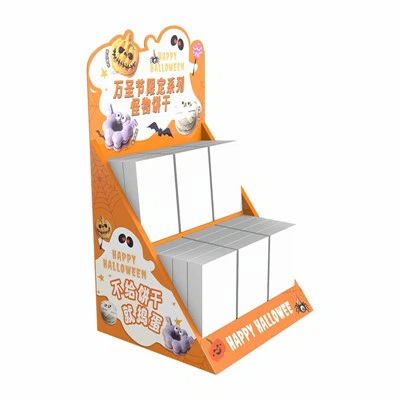
At the end of the day, merchandising strips aren’t just for lightweight impulse buys anymore. They’re a versatile, space-saving, cost-effective solution for displaying heavy items—if you choose the right ones and install them properly. If you’re looking to upgrade your displays, replace your bulky wire shelving, or test how heavy merchandising strips can work for your products, reach out to our team to discuss your specific needs. We’ll provide custom recommendations, sample testing, and support to make sure your display works as hard as your products do.
Acrylic Counter Display Case Reference
- Retail Industry Leaders Association. (2022). Space Optimization in Modern Retail: Balancing Display and Sales. RLI Research Report.
- American Society of Testing and Materials. (2021). Standard Test Methods for Load Capacity of Retail Display Hardware. ASTM International.
- National Retail Federation. (2023). In-Store Display Trends: Maximizing Space and Product Visibility. NRF Annual Retail Tech Report.
- Journal of Retail and Consumer Services. (2020). Heavy-Duty Display Solutions: Impact on Retail Loss Prevention and Customer Safety. Elsevier.
- Merchandising Institute of America. (2022). Guide to Selecting Merchandising Strips for Heavy Item Applications. MIA Industry Best Practices.
Guangzhou Guangjie Display Products Manufacturing Co., Ltd.
We’re well-known as one of the leading merchandising strip manufacturers in China, also support customized service. Welcome to buy bulk high quality merchandising strip at competitive price from our factory. If you have any enquiry about pricelist and quotation, please feel free to email us.
Address: No. 16-1 Lilv Road, Dashi Street, Panyu District, Guangzhou City, Guangdong Province
E-mail: guangjie_dp888@163.com
WebSite: https://www.gjdisplaystand.com/
