If you’ve ever bought a spot welding machine, you know the drill: it’s supposed to make clean, consistent welds every single time, right? But here’s the thing—even a brand-new machine can pull garbage out if its output isn’t tested properly before it hits the production line. As a spot welding machine supplier, I’ve seen way too many folks skip this step and end up with wonky welds that ruin parts, waste material, and cost them tons of cash to fix. Today, I’m breaking down exactly how to test your machine’s output the right way, no fancy PhD required—just real-world tips that I’ve used with customers for years. Spot Welding Machine
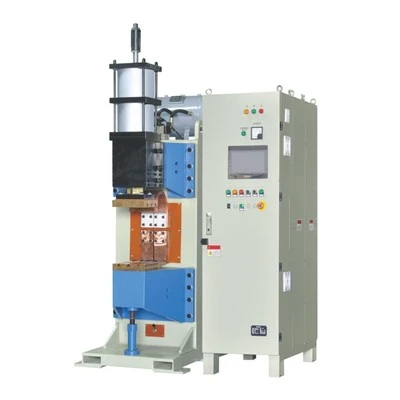
First off, let’s get one thing straight: testing output isn’t just for when you unbox a new machine. You should do it regularly—like every few weeks if you’re running it nonstop—even if you just swapped out an electrode or tweaked a setting. Most people think “output” is just how much juice the machine puts out, but it’s way more than that. It’s the combination of current, voltage, pressure, weld time, and even how the heat transfers through the electrodes to the metal. Mess up any one of those, and your welds will be weak, inconsistent, or just plain ugly.
Let’s start with the easiest, most basic test that anyone can do at home or in the shop—no expensive lab gear needed. I call this the “poke test,” but don’t worry, it’s not as silly as it sounds. Grab a few pieces of the exact metal you’ll be welding every day—same thickness, same alloy, same everything (if you use 16-gauge steel for car body parts, don’t test with 20-gauge aluminum). Set your machine to the settings you usually use, then fire 10 consecutive welds on the same spot on the metal. Now, try to pull those two pieces apart with pliers or a vice. If they separate super easy, that’s a red flag. If the metal actually tears before the weld breaks, you’re good. Wait—no, hold on. Wait a second, that’s only part of it. Some machines will hit max current for a millisecond, which makes a hot weld that tears, but the next weld is garbage because the current dipped. That’s why you need more than just the poke test.
Okay, so next step: if you want actual numbers, you need a clamp-on current meter and a high-speed data logger. I know, I know—those things sound fancy, but they’re not that expensive anymore, and every shop should have one for spot welds. Here’s how to use ’em: clamp the current meter around the secondary cable (the one that carries the weld current to the electrodes) and hook the data logger up to it. Then run a series of welds—like 20 to be safe—at your standard setting. What are you looking for here? First, the peak current. Most spot weld machines are rated at, say, 50 kA (kiloamps)—but if your actual peak current is 30 kA, that weld ain’t gonna be strong. Second, consistency. If the current jumps around by 10% or more between welds, that’s a problem. I had a customer once who bought a cheap off-brand machine, did this test, and found that the current dropped 25% after 5 welds because the transformer was overheating. He sent it back and got a machine from us, and that never happened.
But wait—current alone isn’t enough. Voltage matters too, right? Because power is current times voltage. Most people skip voltage testing, but it’s super important. If your electrodes are dirty or worn down, the resistance between the electrode and the metal goes up, so the voltage has to be higher to push the same current through. That extra voltage means more heat on the electrode, which makes them wear out faster. How do you test voltage? You can use the same data logger, just hook it up across the two electrodes (make sure the machine is off when you do this, dude). Run the same welds, and check the voltage. If it’s spiking above your machine’s rated range, that’s a sign something’s off—either dirty electrodes, a loose connection, or a dying transformer.
Now, pressure. Oh my god, pressure is the most overlooked part of spot welding, full stop. I can’t tell you how many customers call me saying their welds are inconsistent, and the first thing I ask is, “What’s your electrode pressure set to?” Most of them say, “I just crank it until it feels tight.” That’s not a plan. Too little pressure, and the metal doesn’t mash together properly—you get a cold weld that falls apart. Too much pressure, and you squeeze all the molten metal out of the weld, making it weak, plus it wears out your electrodes way faster. How do you test pressure? There are cheap pressure gauges made just for spot welding electrodes—they screw onto the electrode holder, or you can use a digital pressure pad. Set it to the recommended pressure for your metal (check your machine’s manual, or if you don’t have one, hit me up—I can tell you). Run a few welds, and make sure the pressure stays consistent. If it’s bouncing up and down, your pneumatic system (if it’s air-powered) is leaky, or your mechanical clamp is loose. I had a customer last month who was having 30% weld failure rates, turned out his pressure was dropping 15 psi after 10 welds because of a tiny leak in the air line. Fixed that, and his failure rate went to zero.
Weld time is another big one that people sleep on. A lot of machines let you set weld time in cycles—like 10 cycles, which is 0.16 seconds (most weld cycles are 60 cycles per second, right? So 1 cycle is 1/60 of a sec). If your weld time is too short, you don’t have enough time to melt the metal. Too long, and you burn through the metal, or waste power. How do you test weld time? Most data loggers will track that, or you can use a stopwatch (count the cycles on the machine’s display) to make sure it’s actually doing what you set. I’ve seen machines that are set to 8 cycles, but due to a faulty timer, they only fire for 4. That’s a quick fix, but if you don’t test it, you’ll never know.
Wait, let’s talk about a common mistake a lot of new suppliers make—rating a machine on its maximum current, but not its sustained current. Like, a machine that can hit 60 kA for 1 cycle is cool, but if it can only do 40 kA for 10 cycles, that’s what you need for thick metal. That’s why testing sustained output is just as important as peak current. How do you test that? Run a series of welds, one after another, for a minute straight, and track the current over time. If it drops off after a few welds, that machine’s gonna overheat fast, and your welds will get worse and worse as it runs. That’s a big selling point for our machines—we design them to hold their output even after 1000 consecutive welds, which is why so many automotive shops use ’em.
Oh, and don’t forget about electrode condition! You can test your machine all day, but if your electrodes are caked with spatter or worn down to nubs, your output will be garbage. I tell every customer to test their electrodes at the same time they test the machine. Wipe them clean with a wire brush between welds, check for pitting or uneven wear. If the face of the electrode is indented, that changes the contact area, which changes the resistance, which changes the current. I had a guy last year who kept testing his machine and getting low current, and it turned out his electrode face was like a half-moon shape—so the contact area was half what it should be. Replaced the electrodes, and his current jumped right up.
Let’s wrap this up with a quick, step-by-step test you can do today, no fancy gear required: 1. Grab 3 pieces of your standard weld metal (same thickness, alloy). 2. Clean your electrodes. 3. Set your machine to your usual settings. 4. Fire 5 welds, testing: a) Peak current (use a cheap clamp meter if you have one), b) Weld time (make sure it’s what you set), c) Pull strength (should tear the metal before breaking). 5. Repeat the test after 50 welds to check for consistency. 6. Check pressure with a gauge. If all those check out, your machine’s output is good. If not, give me a shout—we can walk you through troubleshooting, or if you need a new machine, we’ve got you covered.
At the end of the day, testing your spot welding machine’s output isn’t some complicated science—it’s just knowing what to look for, and not skipping the small stuff. I’ve been supplying spot welding machines for over a decade, and I’ll tell you this: the customers who do regular testing have way less downtime, way less scrap, and way more happy clients. If you’re having issues with your current machine, or you’re in the market for a new one, don’t guess—test it, and if you need help, reach out. We don’t do pushy sales, we just make solid machines and help folks get their welds right.

Don’t let bad output ruin your projects. Test your machine, fix what’s broken, and keep your production running smooth. If you have questions, or you want to talk about upgrading your spot welding setup, hit us up—we’re here to help.
Welding Accessories References:
- American Welding Society. (2021). Spot Welding Basics: Testing and Troubleshooting. AWS Press.
- Miller Electric Mfg. LLC. (2020). Operator’s Guide to Resistance Welding Output Testing. Miller Publications.
- Nelson, T. (2019). Practical Resistance Welding for Industrial Applications. Industrial Press.
- Resistance Welding Manufacturers Alliance. (2022). Standard Testing Protocols for Spot Welding Machines. RWMA Technical Bulletin No. 12.
Dongguan Huineng Welding Equipment Co., Ltd.
We are one of the most experienced spot welding machine manufacturers and suppliers in China. With a professional production team, we offer a wide range of products with superior quality. Please feel free to buy customized spot welding machine at competitive price from our factory.
Address: 530 Guantai Road, Xitou Village, Houjie Town, Dongguan City, Guangdong Province
E-mail: fengshanggang75@126.com
WebSite: https://www.huinengwelder.com/
