Hey everyone, if you’ve ever worked with wood-plastic composite (WPC) decking—chances are you’ve had a question that stops you dead in your tracks mid-project: wait, can I actually drill these boards? I’ve been selling WPC decking for like 8 years now, and this is still one of the most common questions I get from homeowners, contractors, even folks who’ve built a few decks before but never touched WPC. Let me break this down straight—no fancy industry jargon, just real talk from someone who’s seen every kind of drill job on WPC boards, from messed-up ones to perfect, long-lasting installs. WPC Decking
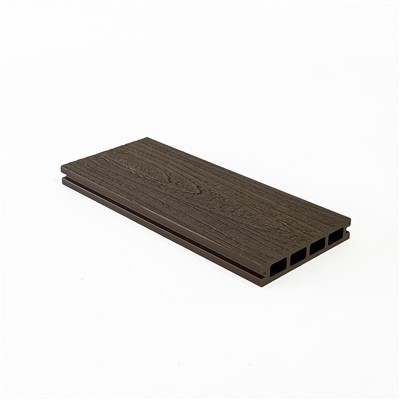
First off, let’s get one thing out of the way: WPC decking is totally drillable. No, it’s not like trying to drill a solid log that’ll send your bit spinning or splinter everything. But it’s not exactly like drilling a cheap pine 2×4 either—there’s a right way and a wrong way, and get that wrong, and you’ll end up with splintered edges, stuck bits, or even boards that crack before you’ve even finished the deck frame. I once had a guy come to me last summer, all frustrated, holding a half-drilled WPC board that split down the middle. He’d used his regular old wood drill bit, cranked the cordless drill to max speed, and pushed way too hard. Total rookie move, and I get it—when you’re used to drilling wood, you just do what you’ve always done, right? WPC’s a mix, though. It’s usually 50% plastic, 50% wood fiber, plus a little binder and UV stabilizer. That combo means it’s denser than softwood, but not as tough as hardwood—so you can’t just wing it.
Let’s start with the basics: why you’d need to drill WPC decking in the first place. Most of the time, it’s for two big jobs: fastening the boards down to the joists (using hidden fasteners or screws) or cutting notches around things like patio posts, planters, or AC units. Wait—speaking of notches, that’s a whole other drill-adjacent thing, but we’ll stick to holes for fasteners first because that’s where 90% of the confusion is.
Now, let’s talk about the right tools, because half the battle here is using the stuff that works, not what you have lying around in your garage. First, the drill bit. You don’t want a regular twist wood bit—those are made to grab and carve through soft wood, which will tear up WPC’s surface, especially the textured top layer. I recommend a carbide-tipped drill bit, specifically for composites. They’re sharp, they last way longer than standard bits, and they don’t melt or snag on the plastic part of WPC. Pro tip: get a 1/8” or 3/32” bit smaller than the screw you’re using. Wait, why? Because WPC can expand and contract with temperature changes—plastic does that, duh. If you drill a hole the exact size of the screw, when the board swells up in the summer heat, the screw will pinch the plastic and crack the board. That’s a huge mistake I see all the time. Leave that tiny gap, and you’re golden—room for movement, no cracks.
Then the drill speed. This is non-negotiable. Set your cordless drill to low speed—like, 500-700 RPM, not the max 2000 RPM you use for drilling small pilot holes in pine. High speed will generate too much friction, and the plastic in the WPC will start to melt. You’ll get that weird, sticky residue around the hole, or even have the bit skid off if it’s not cutting right. I once watched a contractor go at a WPC board at full speed, and he ended up with a hole that looked like a blob of hot glue had been squished around it. Total waste of a board, and he had to cut a new one mid-install, which delayed his job by two hours. Don’t do that.
Also, pressure. When drilling, don’t push hard. Let the bit do the work. If you’re forcing it, you’ll either bend the bit, mess up the hole, or crack the board. Light, steady pressure is all you need. That goes double for the edge of the board—drilling near the end (like within 1 inch of the board’s end) means you have to be extra gentle. I always tell people to drill pilot holes first for screws that go within 2 inches of the end. A 1/8” pilot hole is enough to guide the screw, and it prevents the board from splitting.
Wait, what about countersinking? If you’re using exposed screws (not hidden fasteners that sit under the deck), you need to countersink the screw head so it’s flat, right? For WPC, you have to be careful here too. Don’t countersink too deep—you’ll create a divot on the top of the board that’s ugly and could collect water. Get a countersink bit that matches the screw head, and stop when the head is just barely below the surface. Some people even use a countersink stop collar on their drill bit to keep it from going too far. That’s a cheap accessory, like $5 at any hardware store, and it saves you from a lot of headaches.
Now, what about common mistakes people make, and how to fix them, if you already messed up? First, that melted plastic residue around the hole. If it’s not too bad, you can scrape it off with a flathead screwdriver or a utility knife—just be gentle, don’t scratch the board’s finish. If the hole is too small? Don’t force the screw, grab a slightly larger bit (still under the full screw size) and widen it a tiny bit. If a board did split—like the guy I talked about earlier holding that split half-board—you can usually fix that with a composite repair kit. Most hardware stores sell these little tubes of epoxy that match WPC colors, you just mix it, fill the crack, sand it smooth once it’s dry, and no one will ever notice. I’ve fixed so many split boards over the years with that stuff, it’s amazing.
Wait, another question I get: can you drill existing WPC decking to add something later? Like, if you already have your deck up, and you want to drill holes to attach a railing, or a planter, or even a light fixture? Short answer: yes, same rules apply. But check the temperature first. If it’s super hot outside (like 90°F+), WPC is more flexible but also more likely to expand, so the holes might be tighter. If it’s freezing cold, WPC is more brittle, so you have to be extra careful not to push too hard. I once had a customer try to add railing posts to his deck in the middle of a 95°F day, and the holes he drilled ended up being too tight, so when the plastic cooled down later, it split right around the screws. Lesson: do any drilling on existing WPC when the temperature is between 50°F and 80°F, if possible. That’s the sweet spot where the WPC is stable, not too soft, not too brittle.
Let me also talk about hidden fasteners, because that’s the most common way to install WPC decks now—no exposed screws, cleaner look. Can you drill with hidden fasteners? Wait, hidden fasteners usually snap into the grooves on the side of the WPC boards, right? So technically, you don’t drill through the top of the board at all. But wait, for the edge boards, where you have to fasten the end, you do have to drill a small hole for that screw, and same rules apply: smaller bit, low speed, light pressure. I always tell customers that hidden fasteners are great for most of the deck, but don’t skip the drill step on the end boards—that’s where most split issues happen.
Now, a quick note about different types of WPC decking. Not all WPC is the same. Some is higher quality, with more plastic and less wood fiber, some is cheaper, more wood fiber, less plastic. The cheaper stuff is more brittle, so drilling requires even more care—lower speed, even smaller gap between screw and hole. The higher-end WPC boards I sell? They have UV stabilizers and impact modifiers, so they’re a lot more forgiving when drilling, but you still can’t use max speed and push hard. I once tested drilling a cheap WPC board vs a premium one, same bit, same speed: the cheap one split right at the edge, the premium one had a perfectly clean hole. So that’s another thing—if you’re buying WPC from some random brand, double-check their drilling guidelines, because not all of them are the same.
Wait, what about drilling for other things, like installing a drain or running wiring under the deck? Same rules apply—carbide bit, low speed, measure twice so you don’t drill through a joist or a wire. That’s basic, but worth repeating. I’ve had a few customers who drilled a hole for a drain and ended up hitting a joist, which made them have to add a new joist, so they lost a day of work. Pro tip: mark the joists with a stud finder before you drill, that’s way easier than guessing.
Let’s wrap this up with a quick recap, so you don’t have to scroll back through all this: 1) Yes, WPC decking is drillable, just not like wood. 2) Use a carbide-tipped drill bit, 1/8” to 3/32” smaller than your screw. 3) Set your drill to low speed (500-700 RPM), no max speed. 4) Light, steady pressure—don’t push. 5) Stay within 1-2 inches of the board’s edge, use pilot holes if you’re closer. 6) Drill when the temperature is between 50°F and 80°F if possible. 7) For existing decks, same rules apply, extra care in extreme temps.

If you’re still on the fence about tackling a WPC deck project, or you’ve messed up a drill job and need help figuring out how to fix it, or you just want to ask more specific questions about what tools work best for your project—hit me up. I’ve been in this game for years, I’ve helped hundreds of homeowners and contractors get their WPC installs right, no matter how big or small the job. Don’t risk ruining your deck over a bad drill job, reach out and we can walk through everything together. We’ve got all the tools you need, plus replacement boards if you really mess one up, and tips for every step of your deck build.
PVC ASA PRODUCTS References:
- American Wood Council. (2021). Wood-Plastic Composite Decking Installation Best Practices.
- Composite Decking Manufacturers Association. (2022). Tool Specifications for Drilling and Fastening WPC Decking.
- National Association of Home Builders. (2020). Outdoor Living Space Construction Guide: WPC Decking Handling Techniques.
Zhejiang Timber Biology New Material Co., Ltd.
As one of the most professional wpc decking manufacturers and suppliers in China, we’re featured by quality products and good service. Please rest assured to wholesale custom made wpc decking at competitive price from our factory.
Address: No.192, Longshan Road, Zhongguan Town, Deqing County, Huzhou City, Zhejiang Province
E-mail: info@tongrui.cc
WebSite: https://www.utimberwpc.com/
