What is a Pipe Flange Connection? Let’s break this down in plain, practical terms because if you’re looking to work with flanges, you don’t need a textbook definition—you need to know why they matter, how they work, and when to use ‘em. I’m a flange supplier, so I’ve talked to guys in plumbing, chemical plants, and even small-scale construction who mix up flanges with other pipe fittings all the time, and that confusion costs time and money. Let’s clear that up first. Flanges
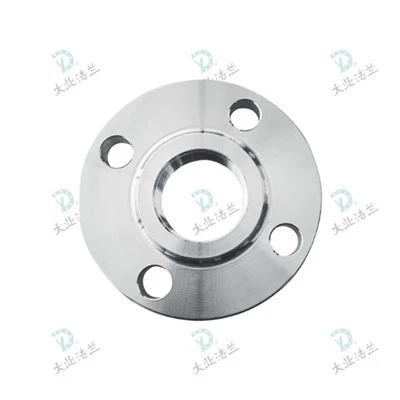
A pipe flange connection is, at its core, a reusable way to link two sections of pipe (or a pipe and a valve, pump, or other equipment) without welding them permanently. Think of it like two metal plates—those are the flanges—each with a set of holes around the edge. You line the holes up, slide bolts through ‘em, add a gasket in between, and tighten the nuts. That gasket is key: it’s the seal that stops leaks, whether you’re moving water, gas, or even harsh chemicals.
Wait, let’s get specific. Flanges aren’t just one size fits all. There are different types, and each has a job. For example, the most common one I sell is a Weld Neck Flange. These get welded to the pipe end first (that’s the “weld neck” part, the tapered middle) then bolted to another flange. They’re strong enough for high-pressure stuff—like oil refineries or long-distance pipelines—because the weld spreads stress evenly, so there’s zero chance of the connection failing. Then there’s Slip-On Flanges: these slide over the pipe end, get fillet-welded on the inside and outside, and bolt up. They’re cheaper and easier to install, perfect for low-pressure jobs like residential plumbing or small process lines. We also do Blind Flanges, which are solid plates—use those when you need to cap off a pipe section, like shutting down a line for maintenance.
Why bother with flanges instead of just welding? Oh, that’s a big one. Welding a pipe shut means if something downstream breaks, you have to cut the whole pipe out and re-weld. With flanges? You just unbolt the connection, swap out the broken part, and go. That’s a huge time-saver, especially for industrial setups where downtime costs thousands an hour. I had a client last year in a food processing plant—they had a valve leak, and a flange connection let their crew swap the valve in 20 minutes. If they’d welded it, they would’ve shut down for 3 hours minimum. Another win: flanges let you connect different pipe materials, too. Like, if you have a steel pipe and a PVC pipe, you can use a special adapter flange to link ‘em without ruining either material. Yeah, that’s a thing—no need to force incompatible pipes together.
But let’s talk about the stuff most people mess up when it comes to flanges. First, size. You can’t just grab any flange for your pipe. If your pipe is 4 inches wide (nominal pipe size, or NPS, that’s what we use here), you need a 4-inch flange. If you get a 3-inch, it won’t fit—simple as that. Then there’s pressure rating. Every flange has a rating, like 150 PSI, 300 PSI, or even 1500 PSI for super high-pressure jobs. If you use a 150 PSI flange on a line that runs 500 PSI, that seal will blow out, and you’ve got a leak. Gaskets matter too: a rubber gasket works for water, but a chemical-resistant PTFE gasket is non-negotiable for acid or gas lines. I see guys skip this all the time, and it’s why calls come in at 2 a.m. about a leaky line.
Wait, let’s address a myth I hear a lot: “Flange connections are only for big industrial jobs.” Nah, they’re everywhere. Your local water treatment plant uses ‘em, your car’s exhaust has flanges linking the pipe to the catalytic converter, even the HVAC system in a office building uses small flanges to hook up ducts and valves. For residential plumbers, they’re great for replacing a section of pipe without tearing out walls—just unbolt the old flange, slide in the new pipe, bolt it up. No cutting drywall, no permanent welds.
As a flange supplier, I’ll be real with you: not all flanges are created equal. A lot of cheap flanges out there are made from thin metal, or have mismatched hole spacing, or skip the proper heat treatment that makes ‘em strong. When you buy from us, all our flanges are tested for material quality—whether it’s carbon steel, stainless steel, or alloy steel—so you know they won’t crack or bend under pressure. We also stock all the standard types, but we can make custom ones too, if you have a weird pipe size or a specific pressure requirement.
So, let’s recap to make sure we’re on the same page. A pipe flange connection is a bolted, sealable link between two pipe components, using metal flanges and a gasket, designed to be reusable. It’s better than welding for jobs where you need access, maintenance, or material compatibility. But get the size, pressure rating, and gasket right, or you’ll end up with leaks or failure.
If you’re working on a project—whether it’s a residential plumbing fix, a industrial pipeline build, a food processing setup, or anything in between—and you need to get the right flanges, don’t guess. Hit me up to talk through your needs. We can help you pick the right type, size, and material, so you don’t waste money on the wrong stuff or deal with headaches down the line.
Pipe Fittings References:
- ASME B16.5, Pipe Flanges and Flanged Fittings: NPS 1/2 through NPS 24, American Society of Mechanical Engineers.
- Miller, R., Pipe Fittings and Joints Handbook, Industrial Press Inc.
- American Water Works Association (AWWA) M11, Pipe Flanges and Flanged Connections.
Zhejiang Daye Flange Co., Ltd.
Zhejiang Daye Flange Co., Ltd. is one of the most experienced flanges manufacturers and suppliers in China. With a professional production team, we offer a wide range of flanges with superior quality and competitive price. Welcome to buy CE approved flanges in stock here and get pricelist from our factory. We also accept customized orders.
Address: Headquarter: 8, Gangqiang Road, Yongxing Street, Longwan District, Wenzhou City, Zhejiang Province, China
E-mail: sales@dayeflange.com
WebSite: https://www.daye-flange.com/
