Hey everyone, I’m Mike, and for the past 7 years, I’ve been helping homeowners figure out what works for their spaces—especially when it comes to accessibility. Last month, I got a message from a couple in Portland who were renovating their 1920s bungalow, where the wife uses a power wheelchair. They asked a question I get all the time: “Can a home elevator be used as a wheelchair lift?” At first, I get the confusion—both move people between floors, right? But let me break this down straight, no sales jargon, just what I’ve seen work (and what doesn’t) for real families. Home Elevator
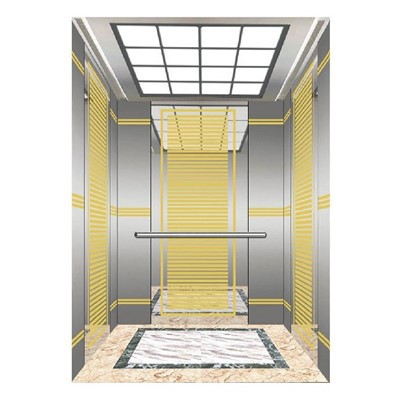
First, let’s get the basics out of the way. A residential home elevator is basically a mini version of an office elevator: it’s enclosed, has doors that align on both the cab and the floor, runs on a steel cable and pulley system, and can go up or down multiple floors. A wheelchair lift, on the other hand, is usually a smaller, open platform (sometimes enclosed, but not always) designed to move someone between a ground level and a porch, or a single floor if the house has a small step-up. Wait, but why would someone even think they’re interchangeable? Oh, right—both move someone with mobility limits between heights, so it’s easy to mix up if you’re not dealing with these every day.
Let’s start with the good news: in some specific cases, a home elevator can work for a wheelchair user. But it’s not a one-size-fits-all, and there are big caveats. Let’s talk about the practical stuff you deal with daily, if you or a loved one uses a power wheelchair. First, the size of the elevator cab. A standard residential elevator cab is usually 48 inches deep by 36 inches wide. That works for most power wheelchairs, right? Wait, no—wait a second. Some power chairs, especially the heavy-duty ones for people with limited upper body strength, can be up to 52 inches long. If your cab is too small, you can’t turn around in it, which means you either have to back out every time (super dangerous on a moving elevator) or ask someone to help you—something you might not want or be able to do.
I had a client in Denver a few years back, a guy named Tom who uses a Permobil power chair. He thought his 48×48 elevator would work, but when he tried it, he couldn’t make a 180-degree turn without scraping the walls. We ended up upgrading his cab to 60×60, and that made all the difference. The key here: if your wheelchair is less than 50 inches long, a standard home elevator can be adapted, but if it’s longer, you’ll need a custom cab. Also, most home elevators have a weight limit of around 1,000 pounds. A power wheelchair plus a person is usually around 400-500 pounds, so that’s enough—unlike some small wheelchair lifts, which often cap at 500 pounds, which might not handle a heavy-duty chair.
Now, the big problems that make a home elevator a bad substitute for a wheelchair lift, 9 times out of 10. First, accessibility at the entry. Wait, no—wait, wheelchair lifts are designed for specific, single-level gaps. Like, if you have a 12-inch step up from your driveway to your front porch, a vertical platform lift (the most common wheelchair lift) is built exactly for that height. It’s installed right at the porch, has a low entry ramp that aligns perfectly, and it doesn’t require a pit or a hoistway in the house.
A home elevator, though, requires a hoistway—that’s the enclosed shaft it runs in. If your house has no existing space for a hoistway, you’re either cutting into walls, adding an addition, or using a through-floor model that goes through the center of the house. That’s way more expensive and disruptive than adding a wheelchair lift to the outside of the house. I’ve had clients say, “Why not just use the elevator for the porch step?” Let me tell you—you can’t. Elevators only connect floor levels, so a porch step is a single height change that’s lower than the first floor. The elevator doesn’t stop there; it goes up to the second floor or down to the basement. So you can’t use it for that small gap. That’s a huge mistake a lot of people make when they’re first shopping.
Another big thing: safety features. Wheelchair lifts have specific safety rules, right? They have auto-locking gates, non-slip platforms, and sensors that stop the lift if something gets in the way. Home elevators have different safety rules—they have door interlocks that keep the cab from moving if the doors are open, emergency phones inside, and backup power in case the electricity goes out. But here’s the catch: a lot of home elevators are not designed for constant use by wheelchair users. Wait, what do I mean by that? Let’s say you need to move between floors 20 times a day (if you’re a caregiver, or if your bedroom is upstairs and the bathroom is downstairs). Wheelchair lifts are built for high, constant use—they cycle a lot, and their components are made to handle that. Home elevators, especially the cheaper, residential ones, are built for occasional use—like moving furniture, or guests, not for daily, multiple trips a day. I’ve seen a cheap home elevator’s motor burn out in 2 years because a wheelchair user was using it 15 times a day. A wheelchair lift would last 10+ years in that same scenario.
Wait, but let’s not bash home elevators here—because when they are the right choice, they’re awesome. Let’s talk about when a home elevator actually is a good fit for a wheelchair user. First, if you have multiple floors to navigate. Like, if you’re on the third floor of a townhouse, or you have a main floor for living and a basement for storage/working out, and you need to move between all three on a daily basis. That’s where a home elevator shines. Wheelchair lifts can only go one level, right? They’re single-stage. If you have two or three floors, you can’t use a wheelchair lift to go from first to second to third—so an elevator is the only option there.
Another case: if your home has a bathroom, bedroom, and kitchen on different floors. For example, an elderly parent who uses a wheelchair and can’t climb stairs, and you want to have their bedroom on the main floor (but they want to work in a home office on the second). A home elevator lets them move between the two, no problem. Also, if you have existing space that’s perfect for a hoistway—like a closet, or a narrow hallway between two rooms. No need to add an addition, just repurpose that space into a hoistway. That’s a common scenario I see a lot.
Now, what about modifications? If you already have a home elevator and you’re thinking, “Can I turn this into a wheelchair lift?” No, probably not. Wait, let’s clarify: you can modify a home elevator to work for a wheelchair user, but you can’t turn it into a wheelchair lift. The modifications would be: widening the cab, adding a lower entry threshold (so the wheelchair can roll in without a big step), adding a power door opener instead of manual doors, and making the controls at wheelchair height (around 48 inches from the floor, which is standard for wheelchair accessibility). But even with those modifications, it’s still an elevator, not a lift. It still requires a hoistway, it’s still for multiple floors, and it still doesn’t work for single-level gaps like porches or steps.
Wait, I should mention a common myth: some people think a wheelchair lift is just a small elevator, but no. Let’s look at the ANSI rules—American National Standards Institute, which sets the safety standards for these things. Wheelchair lifts are covered by ANSI A18.1, which is for accessibility lifts. Home elevators are covered by ANSI A17.1, which is for passenger elevators. There are big differences in load testing, safety equipment, and use cases. For example, a wheelchair lift must have a handrail on both sides of the platform, while a home elevator only needs handrails inside the cab if the cab is over 54 inches deep. That’s a small detail, but it matters for safety.
Another thing: accessibility for care partners. If you have a caregiver who needs to help you move, can they fit in the elevator with you? A standard elevator is 36 inches wide, so a caregiver can stand next to the wheelchair, but if you have a power chair that’s 36 inches wide, there’s no extra space. A wheelchair lift is usually 36-42 inches wide, so it can fit the wheelchair and a caregiver easily. That’s a big one if you need help with transfers or moving between appointments.
Let me give you a real example to make this concrete. Last year, a client named Lisa came to us. She uses a power wheelchair, lives in a two-story home, and has a step up from her driveway to her front porch. She thought she could use a home elevator for both the porch step and the second floor. We talked her through it: first, a home elevator can’t do the porch step—she’d need a vertical lift for that. Second, her power chair is 51 inches long, so a standard 48×48 elevator cab would be too small. We ended up installing a 60×60 home elevator for her floors, and a separate wheelchair lift for the porch. Total cost was more than she originally planned, but she told us it was the best decision she ever made. She uses the elevator 8-10 times a day to go to her bedroom, bathroom, and home office on the second floor, and the lift for when she goes out to the garage or drives. No issues, no compromises.
Now, what about the cost? That’s a big factor for most people. A standard residential home elevator costs between $25,000 and $50,000, depending on the number of floors and cab size. A wheelchair lift costs between $3,000 and $10,000. So if you only need to move between one level, a wheelchair lift is way cheaper. If you need to move between two or more levels, you have to go with an elevator, and you might still need a lift for exterior access. That’s a cost trade-off a lot of families don’t see coming.
Wait, let’s address a question a lot of people ask: can you use a wheelchair lift for multiple floors? No, almost never. The only exception is a vertical platform lift that’s stacked, but those are super rare, expensive, and not approved for residential use in most areas. They’re more for commercial buildings. So for homes, if you have more than one floor, an elevator is the only way, and even then, it has to be properly adapted for a wheelchair user.
Another safety note: emergency access. If the power goes out, a home elevator has a backup battery that lets you move it to the nearest floor and open the doors. A wheelchair lift also has a backup battery, but it’s only for moving between two levels, not multiple. So if the power goes out and you’re on the third floor of your home, a wheelchair lift won’t help you—your elevator will, as long as the backup battery works (which they all do, if installed correctly). That’s a critical safety feature for anyone who relies on their mobility device.
Now, let’s talk about common mistakes people make. The first one I mentioned earlier: thinking they can use an elevator for a single-level step. The second is buying a cheap, imported home elevator online, not realizing it’s not built for wheelchair use. I had a guy last year who bought a $12,000 elevator from a big box store, and his power chair got stuck in the cab because the doors were only 32 inches wide. That’s too narrow for a standard power chair (which is 30-32 inches wide, but needs a little room to maneuver). We had to rework the doors and widen the cab, which cost him another $5,000. Avoid that—always work with a reputable supplier who specializes in accessibility, not just generic elevators.
Another mistake: not considering the space needed for installation. A home elevator needs a hoistway—usually a 5×5 foot space (bigger for custom cabs) that goes from the basement to the second floor. If you have a small home, that might mean taking out a closet, or even a small bathroom. A wheelchair lift only needs a 3×5 foot space outside, so it’s way less disruptive. That’s a big deal if you’re not ready to remodel major parts of your house.
So, to sum up: a home elevator can be used in place of a wheelchair lift only in very specific scenarios. Let’s list those scenarios clearly: 1) You need to move between two or more floors (a wheelchair lift can’t do that). 2) You have enough space to install a hoistway that’s big enough for your power wheelchair (add at least 10 inches to the length and width of your chair for cab space). 3) You’re prepared to make modifications to the elevator: lower thresholds, power door openers, wheelchair-height controls, and safety features like extra handrails. 4) You don’t need to access a single level gap (like a porch step) that’s lower than your first floor—for that, you still need a separate wheelchair lift.
If you only need to move between one level (like a front porch and driveway, or a back patio and backyard), a wheelchair lift is always the better, cheaper, and less disruptive choice. Don’t waste money and space on an elevator for that single small gap.
Now, let’s talk about what we do as a home elevator supplier. We don’t push elevators on everyone—we give honest advice. If a family only needs a wheelchair lift, we’ll point them to trusted local lift providers. If they need an elevator for multiple floors, we help them customize it for their mobility needs. We also do consultations where we measure your space, check your wheelchair dimensions, and talk through your daily use—no hard sells, just what works for your family.
Wait, I should mention one more thing: code compliance. Every area has building codes for accessibility. Some areas allow home elevators to be ADA-compliant for wheelchair use, but others require separate wheelchair lifts for exterior access. Always check with your local building department before making any decisions. That’s another reason to work with a local supplier who knows the codes in your area—we’ve dealt with this in dozens of cities, so we can tell you what’s required.
I know this can feel overwhelming. Accessibility modifications are a big deal, and you want to make sure you get it right the first time, not have to tear something out and start over. That’s why so many people come to us, confused about the difference between elevators and lifts. At the end of the day, it’s all about your specific needs: how many floors you need to move between, the size of your wheelchair, the space you have, and your budget.

If you’re in the process of planning accessibility modifications for your home, don’t hesitate to reach out. We can walk you through your options, answer any questions you have, and help you make the best choice for your family. No sales pitches, no pressure—just straight talk from someone who’s been doing this for years.
Passenger Lifts References: American National Standards Institute (ANSI) A17.1 Safety Code for Elevators and Escalators, American National Standards Institute (ANSI) A18.1 Standard for Wheelchair Lifts, International Residential Code (IRC) Accessibility Requirements for Dwellings, National Association of Home Builders (NAHB) Guide to Accessible Home Modifications.
Weibo Elevator Co., Ltd.
We’re well-known as one of the leading home elevator manufacturers and suppliers in China, specialized in providing high quality custom service for global clients. We warmly welcome you to buy high-grade home elevator at competitive price from our factory.
Address: Dongxiang Road, Nanxun Economic Development District, Huzhou City, Zhejiang Province, China
E-mail: zoey@webstar.net.cn
WebSite: https://www.webstar-elevators.com/
