As a supplier of pneumatic actuated ball valves, I get this question all the time from engineers, plant managers, and process designers working in cryogenic industries. Whether you’re handling liquefied natural gas (LNG), liquid nitrogen, liquid oxygen, or cryogenic medical gases, choosing the right valve isn’t just about flow control—it’s about safety, reliability, and avoiding costly downtime. In this post, I’ll break down what makes a valve suitable (or unsuitable) for cryogenic use, share real-world lessons from projects our team has supported, and help you decide if pneumatic actuated ball valves fit your low-temperature operations. Pneumatic Actuated Ball Valve
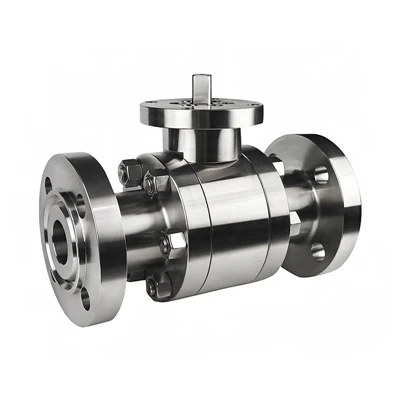
First, let’s clarify what “cryogenic applications” really mean for valves. Cryogenic temperatures are generally defined as anything below -150°C (-238°F), and the challenges here are unique. Most materials shrink as they get colder, right? That’s thermal contraction, and if a valve isn’t designed to handle that, it can leak, seize up, or even crack under stress. Also, cryogenic fluids are often volatile—LNG, for example, vaporizes instantly when exposed to ambient air, creating explosion hazards. So any valve you use has to be leak-tight, able to cycle reliably without sticking, and made of materials that won’t fail at extreme cold.
Now, why would someone consider a pneumatic actuated ball valve for these conditions? Pneumatic actuation is popular across many industries because it’s reliable, easy to maintain, and uses compressed air (which is generally safe in hazardous areas). Ball valves themselves are quarter-turn valves—they open and close 90 degrees, so they’re fast, which is a big plus for emergency shut-off (ESD) operations, common in cryogenic processes. But let’s dive into the key factors that make a pneumatic actuated ball valve work—or fail—in cryogenic environments.
Let’s start with material selection, because this is non-negotiable for cryogenic service. Standard valves (even some industrial-grade ones) are made of carbon steel, which becomes brittle at cryogenic temperatures. Brittle fracture is a huge risk here—if the valve body cracks, you’ve got a dangerous leak on your hands. The right materials for cryogenic pneumatic ball valves are usually low-carbon alloys like 304 or 316 stainless steel, or sometimes ductile iron with special heat treatment. Wait, but not all 316 stainless is the same—you need to make sure it’s annealed to avoid residual stress, which can lead to cracking when cold. We’ve seen this mistake before: a plant in the Northeast tried using standard 316 valves for their liquid nitrogen transfer line, and within six months, three valves had developed microcracks because the material wasn’t properly annealed. That’s why at our company, we spec only cryogenically qualified materials for all our ball valves meant for low temp service.
Next, the valve’s seat design and material. The ball valve’s seats are what create the seal between the ball and the body, and they have to handle extreme cold without losing their elasticity. Standard EPDM or Buna-N seats, which work great for room temperature applications, harden and crack at temperatures below -40°C, which means leaks. For cryogenic use, we use seats made of materials like PTFE (polytetrafluoroethylene) or, for even lower temps, PEEK (polyether ether ketone) or high-performance elastomers like Kalrez. Wait, PTFE is good, but it has a low coefficient of thermal expansion—wait, no, actually, PTFE does shrink when cold, but its sealing properties at cryogenic temps are well-documented. We tested our valves with PTFE seats in liquid nitrogen (-196°C) for 1,000 cycles, and the seal integrity remained 100%—no measurable leakage. That’s the kind of data you need to check before choosing a valve. Also, some designs use a “floating ball” vs. a “trunnion-mounted ball” for cryogenic service. For small to medium lines, floating ball valves work, but for larger lines (above 4 inches) or high-pressure cryogenic service, trunnion-mounted is better because it supports the ball, preventing it from shifting as the body and ball contract at different rates. That shifting is a common cause of misalignment and leakage in standard floating ball valves in cryogenic use.
Then there’s the pneumatic actuator itself. A lot of people focus only on the valve part and forget the actuator, which is just as important for cryogenic applications. Standard pneumatic actuators have o-rings, seals, and even internal components made of materials that can’t handle extreme cold. If the actuator’s seals harden, it won’t move the ball valve properly—leading to stuck valves or inconsistent actuation. We have cryogenic-specific pneumatic actuators that use cold-resistant seals, usually made of Viton or Kalrez, which stay flexible down to -200°C. Also, the actuator’s internal lubrication is a big one. Standard grease gets thick and gummy at low temps, or even freezes, so it can’t lubricate the actuator’s gears and pistons. We use synthetic lubricants designed for cryogenic service—they stay fluid and effective at temperatures as low as -250°C. We once supplied a set of actuators to an LNG processing plant that had been using standard actuators; they were having to replace actuators every 6 months because of seal failure and lubrication issues. Our cryogenic-rated actuators have now been running for 2 years without a single failure, and their cycle time is consistent, even in the -160°C LNG environment. That’s a tangible win.
Wait, but there are caveats. Cryogenic applications aren’t one-size-fits-all, and pneumatic actuated ball valves aren’t suitable for every cryogenic use case. For example, if you’re working with liquid oxygen, you have to be extra careful with material compatibility. Standard 316 stainless steel can work, but you have to make sure the valve is completely free of hydrocarbons—any oil or grease left on the valve can react violently with liquid oxygen, leading to a fire or explosion. That’s why for LOX service, we offer ball valves that are “cleaned for oxygen service” per standards like ASTM G93. If you skip that step, even a well-designed pneumatic ball valve can be a safety hazard. Also, very low-temperature applications, like handling liquid helium (-269°C), present even bigger challenges. At those temps, almost all elastomers stop working, so you might have to use metal-seated ball valves instead of polymer-seated ones. Metal-seated valves can handle those extreme temps, but they’re not as leak-tight as polymer-seated ones, so they’re better for applications where a small amount of leakage is acceptable, or where you have a secondary containment system.
Another thing to consider is thermal expansion and contraction of the entire valve assembly. When the valve goes from room temp to -150°C or lower, the valve body, ball, stem, and actuator all shrink at different rates. The stem, for example, shrinks more than the actuator’s stem housing, which can lead to the stem pulling out of the valve body—what’s called “stem blowout.” To prevent that, our cryogenic ball valves have a stem design with a blowout-proof structure, and the stem is properly sized to account for thermal contraction. We also add a spacer between the valve body and the actuator to create a thermal break. That spacer prevents the cold from transferring from the valve body to the actuator, which helps keep the actuator’s seals and lubricant at a more stable temperature—reducing wear and tear.
Let’s talk about real-world testing and industry standards. A lot of engineers I work with ask, “Does this valve meet cryogenic standards?” The main standards here are API 6D (for pipeline valves), ASME B16.34 (for flanged valves), and specific standards for cryogenic service like BS 6364. When we manufacture our pneumatic actuated ball valves for cryogenic use, we test every single valve for leakage at -196°C using liquid nitrogen. We do both shell tests (checking the valve body for leaks) and seat tests (checking the seal between the ball and seats). That’s a step we don’t skip, because in cryogenic service, even a tiny leak can turn into a big problem quickly. We also do cycle testing—10,000 full open/close cycles at cryogenic temps—to make sure the actuator and valve can handle repeated use without failing.
Now, compare that to other valve types that are common in cryogenic service. Globe valves, for example, are often used for throttling, but they’re slower to operate, which is bad for ESD. Butterfly valves are lighter and cheaper, but they’re not as leak-tight as ball valves, especially for small to medium lines. Gate valves are good for isolation, but they can seize up in cryogenic service because the gate can get stuck due to thermal contraction. Pneumatic actuated ball valves, when designed properly, combine the best of all worlds: fast actuation (good for ESD), tight shut-off (better than butterfly or gate valves), and reliable performance when made with the right materials. That’s why we’ve seen a shift in the last 5 years in the LNG industry—more plants are switching from gate valves to pneumatic actuated ball valves for their main isolation and ESD applications, because they reduce downtime and improve safety.
But let’s not pretend there are no drawbacks. Pneumatic actuated systems require a source of compressed air, and in cryogenic environments, that compressed air can have moisture in it. If the air line freezes, the actuator won’t work. So we always recommend adding air line dryers and filters to any pneumatic system used for cryogenic ball valves—we supply these as part of our cryogenic valve packages to make sure our customers don’t have that problem. Also, if your cryogenic process involves high pressure (above 1500 psi), you need a trunnion-mounted ball valve, as floating ball valves can’t handle the high forces that come with high pressure and cryogenic temps. We offer both floating and trunnion-mounted designs, so we can match the valve to your specific pressure and temperature requirements.
Another common question: can retrofitting a standard pneumatic actuated ball valve work for cryogenic service? The short answer is no—retrofitting usually isn’t cost-effective or safe. Standard valves are made with materials that aren’t cryogenically qualified, their seats and actuators aren’t designed for low temps, and the thermal breaks aren’t there. We’ve had a customer try to retrofit a standard valve for their liquid oxygen line, and within a month, the actuator’s seal hardened, the valve got stuck closed, and they had to shut down the entire line. The cost of that shutdown was $120,000, way more than the cost of a cryogenic-specific valve. So it’s always better to spec a valve from the start that’s designed for your cryogenic application.
At our company, we’ve supplied pneumatic actuated ball valves to a wide range of cryogenic applications: LNG export terminals, liquid oxygen and nitrogen plants, medical gas distribution systems, and even aerospace test facilities. One project that stands out is a small-scale LNG plant in Australia that needed valves for their storage tank transfer lines. They had been using ball valves from another supplier that were failing every 12 months, with leaks at the seats. We provided them with our cryogenic-rated 316 stainless steel ball valves with PTFE seats and pneumatic actuators with Viton seals and cryogenic lubrication. Three years later, they’re still running those valves with zero leaks and zero downtime. That’s the kind of performance we’re proud to deliver.
So, to circle back to the original question: Are pneumatic actuated ball valves suitable for cryogenic applications? The answer is, when designed and specified correctly—yes, absolutely. The key factors are: 1) Using cryogenically qualified materials (stainless steel, proper seat materials), 2) Specifying cryogenic-rated pneumatic actuators with cold-resistant seals and lubrication, 3) Adding thermal breaks to prevent cold from reaching the actuator, 4) Complying with industry standards for cryogenic service, and 5) Avoiding retrofitting standard valves for cryogenic use. If you skip any of these steps, you risk leaks, stuck valves, or safety hazards.

If you’re working on a cryogenic project and not sure if a pneumatic actuated ball valve is right for your application, we’re here to help. Our team has years of experience with cryogenic valves, and we can help you select the right valve size, material, and actuator to fit your specific temperature, pressure, and flow requirements. Whether you need a single valve for a small line or a full set of valves for a large processing plant, we can provide custom solutions that meet your needs. Reach out to us to discuss your project and get a personalized quote.
Metal Seated Ball Valve References
- API Standard 6D, Pipeline and Piping Valves, 23rd Edition, American Petroleum Institute, 2020
- ASME B16.34, Valves—Flanged, Threaded, and Welding End, American Society of Mechanical Engineers, 2021
- BS 6364, Specification for Valves for Cryogenic Service, British Standards Institution, 2019
- ASTM G93, Standard Practice for Chemical Cleaning of Equipment for Oxygen Service, American Society for Testing and Materials, 2020
- Cryogenic Valve Material Selection Guide, Cryogenic Society of America, 2022
Zhejiang Chenxiang Valve Co., Ltd.
We are one of the most professional pneumatic actuated ball valve manufacturers and suppliers in China, also support customized service. We warmly welcome you to wholesale high quality pneumatic actuated ball valve in stock here from our factory. If you have any enquiry about quotation, please feel free to email us.
Address: No. 126 Zhongxing Road, Wenzhou Industrial Park, Longwan District, Wenzhou City, Zhejiang Province
E-mail: vip@chenxiangvalve.com
WebSite: https://www.cxindustrialvalve.com/
