If you’ve ever wondered why a bag of cornflakes is uniform or your local bakery’s flour doesn’t have random clumps or gritty chunks, you can thank the grading process at a commercial grain mill. As someone who’s been supplying gear and support to these mills for over a decade, I’ve walked through this step more times than I can count—sometimes at 2 a.m. when a mill’s line goes down during harvest season, so it’s far from the clean, polished process you might see in a textbook. It’s messy, it’s precise, and it’s make-or-break for turning raw grain into something actually useful for food, feed, or industrial uses. Let’s break it down like I’d explain it to a new mill operator who just got off a long haul from the farm. Commercial Grain Mill
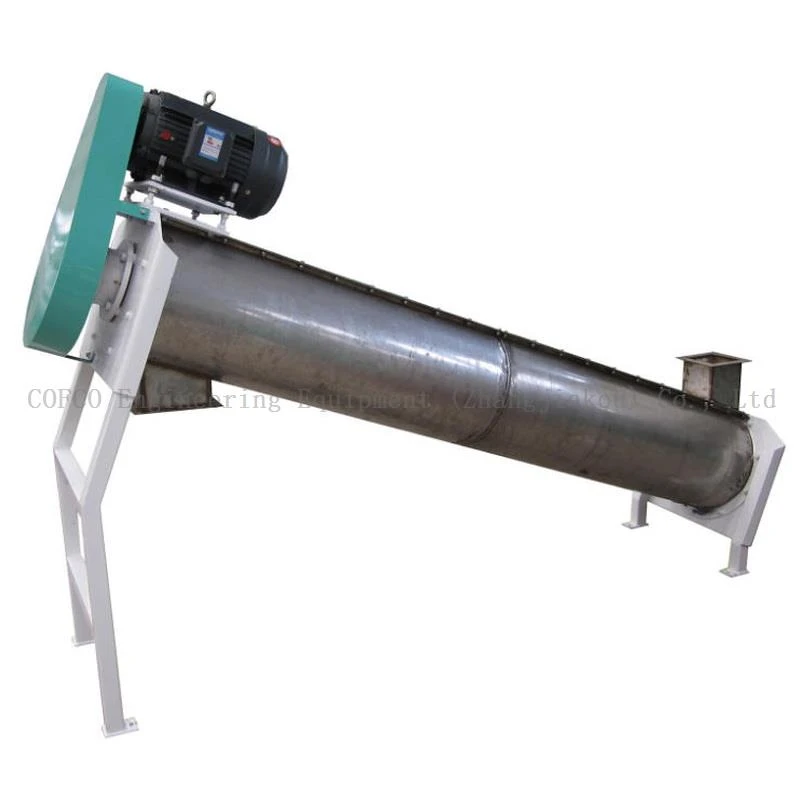
First, let’s get one thing straight: grading ground grains isn’t just “sifting stuff.” It’s separating every particle by size, shape, density, and even composition—because a mill that sells flour can’t have bits of broken cob or wheat bran clumps mixed in, and a feed mill for cattle needs specific particle sizes so the cows can digest it without wasting feed. The whole point is consistency, because that’s what buyers pay for. A bakery won’t trust flour that’s sometimes 80 mesh and sometimes 120 mesh; a biofuel plant needs uniform grain particles to keep their reactors running efficiently. If grading’s off, you’re either dumping product or selling something that doesn’t meet specs—and that’s money down the drain.
It all starts right after the grain gets milled, which we call “grinding.” Wait, no—let’s back up a tiny bit. You can’t grade grain before it’s ground, obviously, but even before grinding, you’re doing a light sort to remove the really big contaminants, like sticks or rocks. But once it’s turned into flour, meal, or whatever you’re making, that’s when the real grading kicks in. Let’s say we’re working with wheat, since that’s the most common grain for human food. You send the cleaned (mostly) wheat through a hammer mill or roller mill, which crushes it into particles. From there, it goes straight to the grading system, usually a series of screens—we call them “sifter decks” in the biz. Each deck has a screen with a specific mesh size, and they’re stacked, right? The top deck has the biggest holes, the bottom has the smallest. Gravity or air flow makes the particles move down through each deck, and only the ones small enough for that screen fall through. The big stuff gets trapped on top.
Wait, but it’s not just mesh screens. If you’re grading something harder, like corn for animal feed, you might use a different type of sifter—maybe a centrifugal sifter, which spins the grain so particles are pushed against the screen, helping smaller ones slip through without clogging. Clogged screens are the bane of every mill operator’s existence, by the way. I’ve seen whole shifts wasted because a screen got clogged with wet corn and no one noticed. That’s why a lot of modern mills have ultrasonic cleaners on their sifters now—they vibrate the screen at super high frequencies to knock off stuck particles, so you don’t have to stop every 10 minutes to whack it with a mallet (fun as that is sometimes).
But size isn’t the only thing we’re grading for. What about density? Like, sometimes you have particles that are the same size as good flour, but they’re lighter—those are usually bran flakes or tiny chaff bits, right? Those would mess with the flour’s texture, so we need to separate them too. That’s where air classification comes in, which we call “air sorting” in the trade. You blow a controlled stream of air through the grain stream. Heavy particles (like the starchy endosperm of wheat, which is what you want for flour) drop straight down, while the light, low-density stuff gets carried away. We can tweak the air speed super precisely here—if you set it too slow, you keep too much bran; too fast, you’re blowing away good flour and losing money. I remember a mill I worked with a few years ago had their air speed set wrong during a big order, and they ended up with 500 lbs of flour mixed with bran that they had to repackage as “bran flour” at half price. Lesson learned: air classification isn’t something you set once and forget.
Then there’s shape. Wait, why shape? Oh, right—if you’re making a product like cornmeal for polenta, you don’t want all flat flakes or all tiny granules; people want that consistent, gritty texture. A lot of mills use a type of sifter called a “plan sifter” that has different shapes of openings, not just round holes. Like, a long, narrow slot is better for separating flat flakes from round granules, because the round ones can roll through the slot while the flat ones get trapped. It’s a small detail, but it’s why your polenta cooks evenly instead of having some mushy spots and some hard chunks. We also use shape grading when we’re making grain for seeds, but that’s a whole different side of the business—most commercial mills we work with are for food or feed, so shape’s a bigger deal for texture.
Now, let’s talk about what happens to the stuff that gets trapped on the screens, or the light stuff from air sorting. That’s not just waste. Like, if you have big chunks of wheat bran from flour grading, you can sell that separately as a high-fiber additive for cereals or breads. The light chaff from air sorting can go to animal feed, or even be burned for energy at the mill—most modern mills use that biomass to power their operations, so it’s circular, no waste. The only real waste is the tiny bits of rock or metal that snuck through the initial pre-grading sort, and those get thrown away. But the goal is to have less than 1% waste, because time on the line is money.
Wait, let’s not skip over quality control, because grading doesn’t work if no one’s checking it. Every hour, mill operators grab a sample from each sifter deck and the air classifier, and run a quick test—usually a particle size analyzer, which is this fancy little machine that shakes a sample through a stack of screens and tells you exactly what percentage is at each size. Back in the day, we’d do it by hand with a shaker and a scale, which took 15 minutes per sample. Now, with the digital analyzers, it takes 2 minutes, and you get a printout that tells you if you’re within spec. But I still see a lot of old-school operators grab a handful of flour and sift it between their fingers—they can tell instantly if something’s off, if there’s a gritty chunk or too much bran. That’s the human part that computers can’t replace yet. A machine might miss a clump of wet grain that’s the same size as good flour, but a good operator feels it right away.
Also, different end products mean totally different grading setups. Let’s say you’re a mill making specialty flour for sourdough bakers—they want a lower extraction rate, meaning more of the endosperm, less bran, so your grading screens would have much smaller mesh sizes, and your air classification would be set to blow away almost all the light bran. If you’re making feed for show cattle, they need coarser cornmeal, like 20 mesh instead of 100 mesh, so your sifters would have bigger holes, and you’d skip the fine air classification. And if you’re making grain for beer brewing? Oh, that’s another one—brewers need malt with very specific particle sizes, because the size affects how well the enzymes break down the sugars during mashing. I’ve actually set up grading systems for craft breweries that are way more precise than some human food mills, because brewers will reject a whole batch if the grain’s off by even a few mesh sizes.
Now, let’s talk about the mistakes I’ve seen, because that’s where the rubber meets the road. Once, a mill in Iowa had a screening deck that was supposed to be 80 mesh, but it was worn down to 70 mesh after a year of heavy use. No one checked it during their daily maintenance, so they ended up shipping flour that had too many big particles, and a big bakery customer sent it back. The mill lost $20k in one order, plus they lost that customer for 6 months while they fixed their grading system and proved they could get back to spec. That’s why regular calibration of the screens and air classifiers is non-negotiable. And another time, a mill operator turned up the air speed too high because he was trying to speed up production during a harvest rush, and he blew away 300 lbs of good wheat flour—they had to shut down for an hour to clean the air filters and reset the system. Rushing grading = lost product, lost time, lost cash.
What’s changing now? New tech, obviously. A lot of mills are using AI-powered grading systems now, with cameras that take thousands of images of the grain every second, detecting particle size, shape, and even contaminants like tiny bugs or mold spores that are too small for screens. I installed one at a mill in Kansas last year, and they told me it cut their waste by 12% and let them run production 5% faster, because the AI adjusts the screens and air speed in real time, no operator waiting for sample results. But even with that, the best mills still have a human spot-checking every batch, just in case. You can’t beat a pair of experienced eyes (or fingers) for the weird stuff the machines miss.
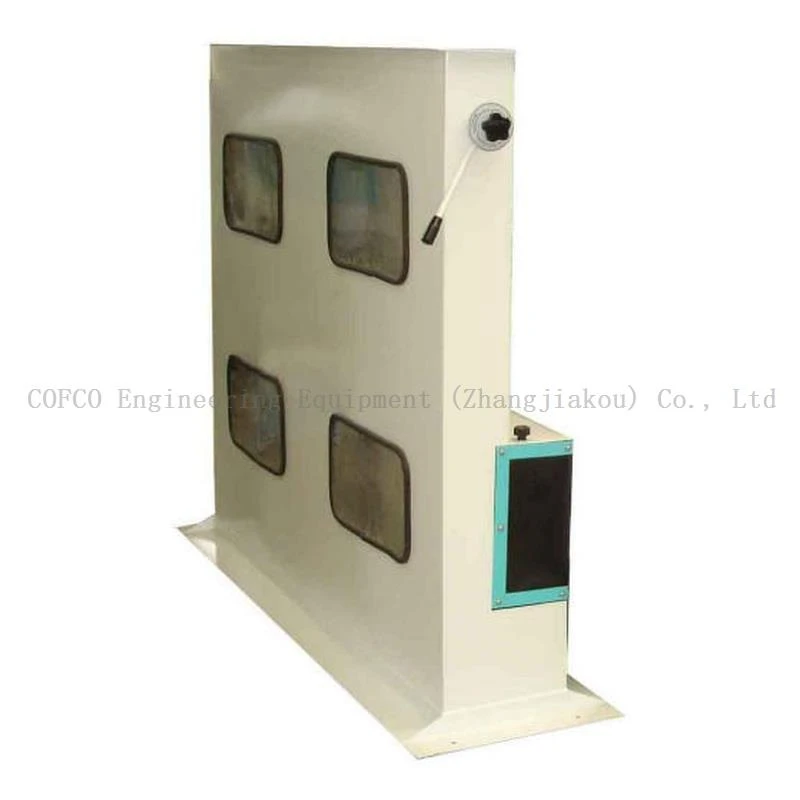
Here’s the thing that most people don’t get: grading ground grains isn’t a afterthought at the mill—it’s the core of their business. A mill that does good grading can charge 10-15% more for their product, because buyers know they can rely on consistent quality. A mill that skimps on grading will get undercut by competitors, and eventually go out of business. As a supplier, that’s why when we set up a grading system for a new mill, we don’t just sell them the screens and sifters—we train their operators, we do on-site checks every quarter, and we tweak the system based on what their specific customers need. One size never fits all when it comes to grading.
Feed Mixing Equipment If you’re a grain mill operator who’s tired of wasting product due to bad grading, or a business owner looking to source consistent ground grains for your food, feed, or industrial products, hit me up. We can walk through your operation, figure out what grading setup will work for your specific grain and your customers’ specs, no one-size-fits-all garbage. Whether you’re a small regional mill or a big national operation, we’ve got the gear and the know-how to make your grading process run smooth, no more wasted time or cash.
References
- American Feed Industry Association. (2022). Grain Grading and Processing Guidelines for Commercial Feed Mills.
- Wheat Foods Council. (2021). Modern Milling and Grading Processes for Wheat Products.
- ASABE Standards. (2023). S508: Procedures for Measuring Particle Size Distribution of Ground Grain and Feed.
- Miller, R. (2020). Air Classification in Commercial Grain Milling: Principles and Practical Applications. Journal of Agricultural and Food Engineering, 41(2), 89-102.
- National Grain and Feed Association. (2022). Best Practices for Grain Mill Quality Control and Grading Maintenance.
COFCO Engineering Equipment (Zhangjiakou) Co., Ltd.
As one of the most professional commercial grain mill manufacturers and suppliers in China, we also support customized service. Please feel free to wholesale advanced commercial grain mill for sale here from our factory. Quality products and reasonable price are available.
Address: No.4 ZhongLiang Street, high-tech industrial development zone, Zhangjiakou, Hebei, PRC
E-mail: mayihui@cofco.com
WebSite: https://www.ceeflourmill.com/
