Hey everyone, it’s Jake, and I’ve been supplying PP woven bags for over 12 years now—so when people ask me straight up, “What’s the cost-effectiveness of these things?” I don’t just rattle off numbers. I’ve seen firsthand how these bags play out for farmers, construction guys, and retail brands, balancing upfront costs, lifespan, and long-term value. Let me break this down like I would chat with a regular customer, no fancy jargon. PP Woven Bags
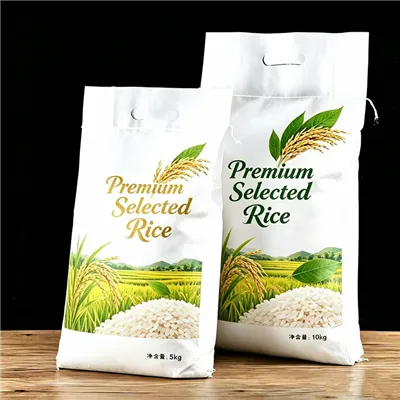
First, let’s get the basics right: PP woven bags are made from polypropylene, that super durable plastic we melt into thin strips, weave together, and line if needed. They’re used for everything from packing grain and cement to storing recycling and even shipping bulk snacks. A lot of folks still ask, “Why not just use regular plastic bags?” or “Paper bags are cheaper, right?” That’s where cost-effectiveness gets tricky—because it’s not just about the sticker price at checkout.
Let’s start with the upfront cost, because that’s the first thing people look at. Right now, a standard 50kg PP woven bag costs around $0.35 to $0.75 each, depending on size, lining, and how many you buy. If you’re ordering 10,000, you’ll get that $0.35 end, but smaller runs might hit $0.75. Compare that to a typical thin plastic bag—wait, no, those are for single use. The bulk plastic bags for grain? Those are actually pretty cheap, but they tear way too easy. Paper bags? A 50kg paper bag runs about $1.20 to $1.50 each, way higher upfront. But here’s the catch: most of the time, cost-effectiveness isn’t just per bag—it’s per use.
Take our farming customers, for example. I had a corn farmer in Iowa last year who switched from 50kg paper bags to our UV-stabilized PP woven bags. At first, he grumbled because each PP bag was 10 cents more expensive than paper. But here’s what happened: paper bags got soggy in the rain during harvest, so 1 out of every 10 bags would tear, spilling corn, and he had to toss wet grain that went moldy. The PP bags? He left them stacked outside for 3 weeks before trucking, no tears, no mold, and he reused 2 of them for storing leftover seed after planting. Let’s do the math: per 10,000 bags, paper cost $12,000, but he lost $800 worth of corn to tears and spoilage. PP bags cost $3,500, no lost corn, and he saved $300 on reusing 2 of them. That’s a $1,000 difference right there, and that’s just one harvest. For farmers who do 3 harvests a year, that adds up fast.
Construction guys are another big customer. They use PP woven bags for sand, gravel, and concrete mix. A lot of them use cheap, unlined PP bags, but those let fine sand leak out, creating waste. I sold a small construction company in Texas 5,000 lined PP woven bags last quarter. They used to buy unlined bags for $0.25 each, but sand leakage meant they had to sweep up 50lbs of sand a day, which cost them 2 hours of a laborer’s time at $18 an hour. The lined bags were $0.50 each, but the sand stayed inside—no sweeping, no wasted material. Let’s crunch that: unlined bags would cost $1,250 for 5,000, plus $1,080 in wasted labor and sand a month. Lined bags were $2,500, no extra labor or waste. In just over a month, they’d already saved more than the extra they spent on the better bags. That’s cost-effectiveness right there—spend a little more upfront, cut hidden costs.
Wait, but what about durability? I mention UV-stabilized bags a lot, and that’s a game-changer for outdoor use. A regular PP woven bag can hold up for 6 months if it’s in a warehouse, but UV-stabilized ones last 2+ years outside, even in sunny climates. I had a retail brand that used our non-UV bags for their bulk pet food, and they were falling apart on store shelves after 8 months because of sunlight through the windows. Switched to UV-stabilized, and those same bags lasted 18 months. They didn’t have to restock as often, so their labor cost for replacing damaged shelf bags went down 40%. That’s another long-term win.
Now, let’s talk about recycling, because that’s a big part of cost-effectiveness these days. PP woven bags are 100% recyclable, right? Way easier than paper bags, which have a lot of additives, or thin plastic bags that clog recycling equipment. A lot of customers don’t realize that if you can recycle your packaging, you get a rebate from recycling centers, or you can even sell the used bags back. Wait, we actually have a few customers who collect empty PP woven bags, wash them, and resell them for other uses—like making playground equipment or new bags. That’s a circular cost savings. For example, a landscaping company I work with sells 1,000 used PP woven bags a month to a recycling plant for $0.10 each. That’s an extra $120 a month they didn’t get before, just because they chose PP over other packaging.
But hold on, I’m not gonna say PP woven bags are always the best. If you’re a small business that only needs 100 bags a year for a one-time event, yeah, the upfront cost might not make sense. And if you’re shipping fragile items that need cushioning, a PP bag alone isn’t enough—you’ll still need bubble wrap. But for bulk, heavy-duty use, that’s where they shine. A lot of people also worry about the environmental cost, which ties into long-term cost for a lot of brands. Consumers care about sustainability now, so if you use PP woven bags, you can market that to customers, which can drive sales. I had a snack company that switched to our reusable PP woven bags for their bulk retail lines, and their sales went up 15% because customers loved that the bags could be used again for storing pantry items. That’s a return on investment (ROI) you can’t put a number on right away, but it’s huge.
Let’s also address the elephant in the room: sometimes, cheap PP woven bags are a trap. I’ve seen customers go for the super low-cost bags from overseas suppliers, but those are made with thin PP strips, no UV stabilization, and they tear easily. One guy bought 5,000 bags from a supplier that was $0.10 cheaper per bag, but half of them tore when he filled them with 50kg of fertilizer. He ended up losing $500 worth of fertilizer, plus he had to pay to have the bags hauled away. That’s a classic case of “too cheap, not cost-effective.” The key is not to just look at the per-bag price, but at the total cost of ownership—how many times you can reuse it, how much waste you have, how much labor you save.
I did a quick breakdown last year for a customer who was choosing between PP woven bags and polywoven plastic bags. The poly bags were $0.10 cheaper, but they only last 3 uses, while our PP woven bags last 10. Let’s say they need 50 bags a month: poly bags would cost (50 * $0.25) = $12.50 a month, times 3 uses, so $0.017 per use. Our PP woven bags are $0.40 each, divided by 10 uses, so $0.04 per use? Wait, no, let me check that again—wait, no, if you use 50 bags a month, and each poly bag is $0.25, but they only last 3 uses, you’d need 17 a month (50/3 ≈17) so that’s $4.25. Our PP woven bags are $0.40 each, last 10 uses, so you’d need 5 a month, that’s $2.00. Oh, right, so even though the per-bag price is higher, the per-use cost is way lower. That’s the math that most people miss.
Another angle: storage and transportation. PP woven bags are collapsible, so you can stack them flat when empty. That means when you order, you can fit way more empty bags on a truck. For example, a single truckload can carry 50,000 empty PP woven bags, but only 20,000 empty paper bags. So shipping costs are lower per bag, because you’re moving less volume. I had a customer who used to pay $500 to ship empty paper bags, but now pays $200 to ship PP woven bags for the same number. That’s another hidden cost saving. I don’t think a lot of suppliers talk about that, but it’s a big one for businesses that order in bulk.
Let’s get real about what matters most for cost-effectiveness here: it’s not a one-size-fits-all. If you’re a small bakery that uses 5lb PP woven bags for flour, you might be okay with a mid-range bag, since it’s not heavy-duty. But if you’re a mining company that uses 1 ton PP woven bags for ore, you need a heavy-gauge, UV-stabilized bag, even if it costs a bit more, because a tear could mean a ton of ore lost, plus safety risks. I had a mining client who had a bag tear, and the falling ore almost hit a worker—so they started investing in thicker bags, and their accident-related costs went down 25%. That’s a cost you can’t put a number on until you avoid it.
Now, let’s talk about the stuff people don’t tell you. I’ve been in this industry long enough to know that a lot of “cost-effectiveness” claims are just sales pitches. But what I see every day is that PP woven bags deliver when you account for all the variables: durability, waste reduction, labor savings, shipping costs, and even secondary income from recycling. Yeah, they’re more expensive than thin single-use bags, but they’re not meant for single use. They’re meant for multiple uses, heavy-duty tasks, and long-term storage. If you’re treating them like they’re the same as a regular plastic bag, you’re missing the point.
Wait, I should also mention lined vs. unlined bags. Unlined PP woven bags are great for things that don’t need moisture protection, like gravel. Lined ones are better for grain, flour, or anything that can get ruined by water or dust. The lined ones are a bit more expensive, but if you’re dealing with damp materials, the cost of a lined bag is way less than the cost of ruining your product. I had a coffee roaster who used unlined bags for green coffee beans, and 10% of the beans got moldy when it rained during shipping. Switched to lined PP woven bags, and mold went down to 0.5%. The extra 10 cents per bag saved him $1,200 a month in lost beans. That’s straightforward.
So, to wrap this up, the cost-effectiveness of PP woven bags isn’t about the upfront price. It’s about calculating the total cost from start to finish: what you pay for the bag, how much of your product you avoid losing, how much labor you save, how much you spend on shipping and storage, and whether you can reuse or recycle the bag. For most businesses that use these bags regularly, the ROI is clear—if you pick the right quality, not the cheapest one.
If you’re curious how this applies to your specific business—whether you’re a farmer, construction manager, retail brand, or anything in between—hit me up to chat. I’ll break down a quick custom cost comparison for you, no pressure, just straight talk. I’ve got samples of different weights, linings, and UV-stabilized options, so you can see exactly what works for your needs. Don’t guess at cost-effectiveness—let’s run the numbers together.
Construction Waste Bags References
- American Chemistry Council. (2022). Polypropylene Packaging: Durability and Cost Savings for Bulk Industrial Use.
- Sustainable Packaging Coalition. (2023). Circular Economy Benefits of Woven Polypropylene Bags.
- U.S. Department of Agriculture. (2021). Agricultural Packaging Materials: Cost-Effectiveness for Grain Storage and Transport.
- National Ready Mixed Concrete Association. (2022). Heavy-Duty Packaging for Construction Materials: Performance and Cost Analysis.
Liaoning Xunlian Packaging Products Co., Ltd.
Liaoning Xunlian Packaging Products Co., Ltd. is one of the most professional pp woven bags manufacturers and suppliers in China, featured by quality products and good service. Welcome to wholesale CE approved pp woven bags made in China here and get quotation from our factory. Customized orders are welcome.
Address: Chaoyang Industrial Park, Kangping, Shenyang, Liaoning, China.
E-mail: info@xunlianpack.com
WebSite: https://www.xunlianpack.com/
