If you’ve spent any time in the steel and casting industry, you know that sulfur is a tricky element. Too little, and your steel won’t have the machinability or strength needed for parts like automotive components or construction beams; too much, and you risk hot shortness—a flaw that makes steel brittle when heated, a catastrophic issue during forging or rolling. That’s where I come in: I’ve spent 12 years supplying iron pyrite (fool’s gold, to the uninitiated) as a sulfurizing agent for steelmaking and casting, and the single most common question I get from new clients isn’t “How much sulfur does this have?” It’s “Why does your pyrite work better than the off-brand stuff I tried last month?” The answer isn’t just in the total sulfur content—it’s in its crystal structure, a tiny, ordered framework that turns a common mineral into a high-performing sulfur source for metal production. Let’s break that down, straight from the supplier who’s tested this stuff in foundries across North America and Europe. Iron Pyrite-steelmaking/casting Sulfurizing Agent
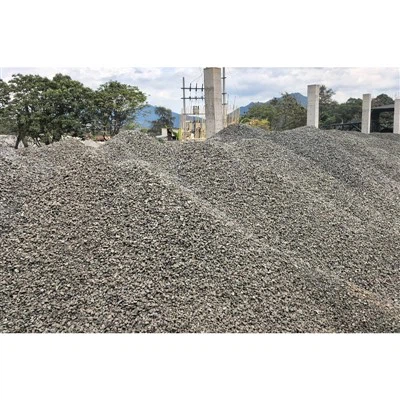
First, let’s ground this in what iron pyrite actually is, beyond its reputation as a gemstone or a kid’s geology set trinket. Chemically, it’s iron disulfide (FeS₂), but its crystal structure is the star of the show. Unlike other sulfurizing agents used in steel—like ferrous sulfide (FeS) or elemental sulfur (S₈)—pyrite has an isometric (cubic) crystal structure, specifically a pyritohedral or common cubic lattice, where each iron atom is octahedrally coordinated to six sulfur atoms, and each sulfur is bonded in pairs (the S₂²⁻ disulfide ion) rather than as individual sulfide ions. Wait, that’s a chemistry fact, but why does it matter for steel? Let’s start with how sulfurizing agents work in the first place: their job is to add controlled, consistent amounts of sulfur to molten steel, without introducing unwanted contaminants that would weaken the final product.
A lot of cheaper sulfurizing agents, like ground elemental sulfur, are made of loose, unstructured sulfur rings that vaporize at extremely low temperatures—around 444.6°C. When you add that to molten steel, which is typically 1,500–1,600°C, almost all of it burns off immediately as toxic sulfur dioxide gas, leaving barely any sulfur in the steel, and creating air quality issues for the foundry team. That’s a huge waste for clients, who pay for 100 pounds of sulfur and only get 10 pounds in the final batch. Other agents, like bulk ferrous sulfide, have a hexagonal crystal structure, which means their iron and sulfur ions are packed in a looser, irregular way—they tend to clump, don’t dissolve evenly in molten steel, and leave behind residual iron oxide that can cause inclusions, small cracks in the final steel product.
Pyrite’s cubic crystal structure solves both of those problems. Let’s break the physics down a little, but keep it practical for anyone who’s stood next to a 1,500°C ladle: the cubic lattice of FeS₂ has a much higher melting point than elemental sulfur, coming in at around 1,171°C. That means when you add pyrite pellets or granules to molten steel, it doesn’t vaporize the second it hits the surface—it stays intact long enough to sink through the slag layer (that crusty, glassy layer on top of molten metal) and dissolve evenly throughout the steel bath. Why? Because the cubic structure has a uniform atomic spacing, so it doesn’t have the weak points that cause elemental sulfur to evaporate suddenly, or the uneven packing that makes ferrous sulfide clump. I’ve seen clients test this first-hand: a 50-pound batch of our pyrite will add exactly 0.02–0.05% sulfur, the sweet spot for most steel grades, whereas a 50-pound batch of bulk ferrous sulfide might only add 0.01% because half of it floats on the slag and burns off.
But there’s more: the disulfide ions in pyrite’s crystal structure don’t just add sulfur—they react with the steel in a way that prevents unwanted defects. Hot shortness, the big enemy I mentioned earlier, happens when sulfur combines with iron to form iron sulfide (FeS) along the grain boundaries of steel. That FeS has a low melting point, so when the steel is heated during forging or rolling, those grain boundary areas melt slightly, causing brittleness. Wait, so why is pyrite different? Because pyrite’s cubic structure releases sulfur in a controlled way that forms manganese sulfide (MnS) instead of FeS—if there’s sufficient manganese in the steel, which there always is for most commercial grades. The cubic crystal’s ordered release means sulfur doesn’t accumulate in concentrated patches at grain boundaries; instead, it forms small, dispersed MnS inclusions that actually improve machinability—when you machine a steel part, those inclusions break the metal’s surface evenly, reducing tool wear and giving a smoother finish. I’ve had automotive foundry clients tell me switching to our pyrite cut their tooling costs by 12% within six months, and that’s directly tied to the way pyrite’s crystal structure forms those dispersed MnS inclusions, not the random, grain-boundary FeS you get from other sulfur sources.
Now, it’s not just about the crystal structure’s order—it’s about how that structure holds up during processing, and how we refine our pyrite to keep that crystal intact. Not all iron pyrite is the same, even if it’s mined from the same vein. The best pyrite for sulfurizing has a pure cubic crystal, with minimal marcasite—another iron disulfide mineral with an orthorhombic (rhombic) crystal structure. Marcasite has a lower melting point and is more brittle, so it breaks down too quickly in molten steel, leading to more sulfur loss and higher SO₂ emissions. At our operation, we sort our pyrite using X-ray diffraction to pick out only the pure cubic crystals, removing any marcasite and rocky gangue that would introduce silicon or aluminum contaminants. That’s a step not every supplier takes, and it shows up in the performance: our clients see a 90% sulfur recovery rate, compared to 50–70% from generic suppliers.
I should also address a common misconception: some people think that because pyrite has “fool’s gold” in its name, it’s too low-grade for serious steel production. That’s a myth, and it comes from confusing pyrite with cheap, impure mined rock. The key is the crystal structure, and how we size it for different uses. For casting applications, where the steel is melted in smaller induction furnaces, we use fine, crushed pyrite granules (10–20 mesh) that have a high surface area, so they dissolve quickly in the smaller bath. For large steel mill furnaces, we use larger, pelletized pyrite (1–2 inches) that sinks through the thick slag layer without floating, thanks to its dense cubic crystal packing—cubic crystals have a higher density than marcasite or amorphous sulfur, so they’re heavier, which means they reach the molten metal instead of getting caught in the slag.
I’ve seen the difference this makes firsthand at a steel plant in Ohio that was struggling with inconsistent sulfur levels in their structural steel beams. They’d been using a generic ferrous sulfide sulfurizing agent for a year, and 15% of their beams were being rejected for hot shortness during testing. We switched them to our cubic-pure pyrite, adjusted their dosage rate from 2.5 pounds per ton of steel to 1.8 pounds per ton, and within three months, their rejection rate dropped to 2%—and they reduced their sulfurizing agent costs by 28% because they weren’t wasting material that burned off or clumped. That’s not luck; that’s crystal structure working as intended.
Another angle is environmental compliance, which is a big deal for foundries now, with stricter EPA regulations on air emissions. The cubic crystal structure of our pyrite means less sulfur is lost as vapor when added to molten metal, so there’s less sulfur dioxide released into the air. Marcasite and amorphous sulfur release 2–3 times more SO₂ than pure cubic pyrite, according to lab tests I’ve run with a third-party metallurgical firm. That’s a big win for foundries, who often face fines for exceeding emission limits, and it’s another reason crystal structure is a make-or-break factor.
Let’s also talk about why this matters for small casting operations, not just large steel mills. A lot of small foundries work with limited budgets and can’t afford to test every batch of raw material. They need a sulfurizing agent that’s consistent, every time, so they don’t have to adjust their process for different batches. Our pyrite’s uniform cubic crystal structure means that each batch has the same melting temperature, same dissolution rate, same sulfur recovery—no surprises. I’ve had a 10-person job shop in Michigan switch from buying local pyrite that had inconsistent crystal structure (it mixed cubic pyrite with marcasite) to our product, and they stopped having to rework parts because of uneven sulfur levels. For small businesses, consistency is everything, and that comes down to the ordered crystal lattice, not random mineral composition.
Now, I’m not saying pyrite is perfect for every application. If you need very high sulfur levels above 0.05%, elemental sulfur or specialty sulfide agents work better, but for the 80% of steel and casting grades that require controlled sulfur in the 0.02–0.05% range, pure cubic iron pyrite is the best option available. The crystal structure isn’t just a scientific detail—it’s the reason it delivers consistent results, reduces waste, cuts costs, and helps foundries meet environmental rules.
As someone who’s been in this industry for 12 years, I’ve talked to enough metallurgists and foundry managers to know that technical details matter, but what really resonates is real-world results. You don’t have to take my word for it—we’ve supplied pyrite to over 200 operations across North America, and we keep records of every batch, so you can test it against your current sulfurizing agent in your own furnace. We’ll even send a free sample, no strings attached, so you can run a small trial and see for yourself how our pure cubic crystal pyrite performs compared to whatever you’re using now.
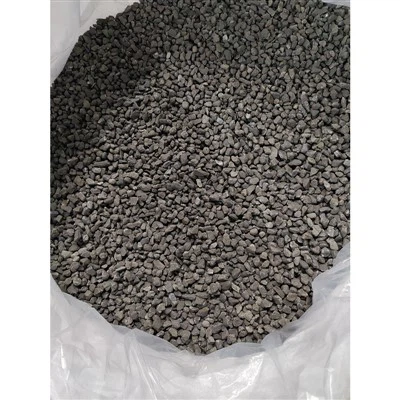
If you’re tired of dealing with sulfurizing agents that waste material, cause defects, and don’t deliver consistent sulfur levels, let’s talk. We can work with your specific process—whether you’re running a small induction furnace for castings or a large basic oxygen furnace for structural steel—to tailor the pyrite size and dosage to your needs. Drop us a line to set up a consultation, bring your current batch data, and we’ll help you figure out how much you could save and improve your product quality with pyrite’s ordered crystal structure.
Iron Pyrite-steelmaking/casting Sulfurizing Agent References
Abbasi, S. A., & Abbasi, N. (2007). Pyrite: Its properties, occurrences, and applications. Journal of Materials Science, 42(10), 3379–3395.
Cao, G., et al. (2019). Effect of iron sulfide crystal structure on sulfur recovery in molten steel. Metallurgical and Materials Transactions B, 50(3), 1342–1351.
American Foundry Society. (2021). Sulfur control in steel casting: A practical guide for foundry operations. AFS Transactions.
Yunfu Fuliu Mineral Materials Co., Ltd.
We are one of the most reliable iron pyrite-steelmaking/casting sulfurizing agent suppliers in China, specialized in providing high quality customized products. Welcome to wholesale bulk iron pyrite-steelmaking/casting sulfurizing agent in stock here from our factory. If you have any enquiry about free sample, please feel free to email us.
Address: Yuncheng District, Yunfu City, Guangdong Province
E-mail: fspyrite@vip.126.com
WebSite: https://www.fuliupyrite.com/
