If you’ve ever watched a giant metal press smash a thick steel block into a custom part, or used a small press to crimp a hydraulic line you just laid, you’ve seen a hydraulic press in action. But most folks don’t stop to think about the heart of that whole setup: the hydraulic pump. I’ve been selling hydraulic pumps for over 12 years now, and let me tell you, it’s way simpler than the jargon-heavy manuals make it sound. No fancy engineering degree needed to get how this thing actually works—especially when you tie it directly to the rest of the press. Hydraulic Pump
First off, let’s break down the basics of hydraulics 101, the stuff that’s the backbone of every hydraulic pump and press. It all boils down to Pascal’s Principle, right? I know that sounds like a term your high school physics teacher drilled into you, but stick with me here. Pascal’s Principle says if you apply pressure to a closed, incompressible fluid, that pressure gets spread equally across every part of the fluid, no matter how big or small the container is. That’s the whole reason a hydraulic press can lift a 10-ton car with a tiny hand pump. The pump is the thing that creates that pressure in the first place—without a good pump, your press is just a useless hunk of metal and hoses.
Now, let’s talk about the hydraulic pump specifically. These bad boys come in a few common types, but for hydraulic presses, you’re almost always dealing with either gear pumps, vane pumps, or piston pumps. I see all three every day at the shop, and each one is built for a different press job. Gear pumps are the cheap, workhorse ones—great for small, hobbyist presses or light industrial setups that don’t run 24/7. They’re simple: two interlocking gears spin inside a tight housing. On the inlet side, the gears pull fluid in, then trap it between the gear teeth and the housing, carry it around to the outlet, and force it out at pressure. The downside? They wear out faster under heavy loads, so they don’t last as long as other types.
Vane pumps are a step up. They have a slotted rotor that spins, with thin vanes that slide in and out of the slots. Centrifugal force pushes the vanes out against the inside of the housing, creating sealed chambers between the vanes. As the rotor spins, those chambers get bigger on the inlet side, sucking in fluid, then smaller on the outlet side, squeezing that fluid out at pressure. They’re quieter than gear pumps and handle medium loads pretty well—perfect for small to mid-sized production presses. The only catch is the vanes can wear if you use dirty fluid, so you’ve got to keep that hydraulic oil clean, something I always drill into my customers.
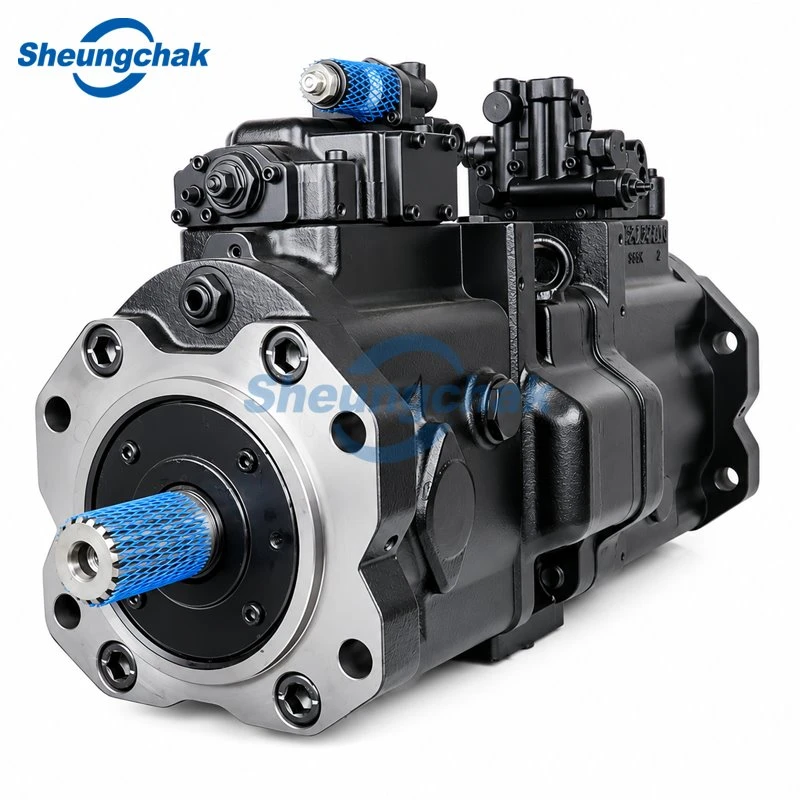
Then there are piston pumps, the heavy hitters. These are the ones that go in large industrial presses that run 12 hours a day, every day, pressing parts for cars, appliances, or construction equipment. Piston pumps have multiple small pistons that slide in and out of cylinders, either in a rotating barrel or a flat plate. Most of the time, they work by changing the volume of the cylinder: when the piston pulls back, the volume inside the cylinder increases, sucking in fluid from the inlet. When the piston pushes forward, the volume decreases, pushing that fluid out at super high pressure. The nice thing about piston pumps is they can handle way more pressure and heavy loads than gear or vane pumps, and many are variable-displacement too—meaning you can adjust how much fluid they push, which saves energy for presses that don’t need full pressure all the time.
Okay, so the pump is creating that pressure, but how does that actually move the press? Let’s walk through the step-by-step process, like I’d explain it to a new guy at the shop. First, the pump is connected to a hydraulic fluid reservoir—usually a metal tank that’s got a filter, a breather cap to keep air out, and sometimes a cooler if the press runs hot. When the pump turns on, it starts sucking fluid from the reservoir through the inlet line, pulling it into the pump’s inlet port. That’s where the Pascal’s Principle part kicks in. The pump doesn’t create pressure out of thin air, by the way—wait, that’s a common myth! Pressure is actually the resistance to flow. If the press’s cylinder is closed off (like when it’s holding a part in place), the pump keeps pushing fluid into the line, and that’s what builds pressure. If there was no resistance, the fluid would just flow freely and you’d have zero pressure.
Next, the pump pushes that high-pressure fluid through a series of hoses and valves to the main cylinder of the press. The press has two sides of the cylinder, right? A big piston and a small piston connected by a rod, all sealed inside a tight cylinder. When the high-pressure fluid gets to the side of the cylinder connected to the big piston, that pressure pushes the piston forward. Since the big piston has a lot more surface area than any tiny input, that small amount of pressure from the pump multiplies into way more force. Let’s do a quick, simple example: if the pump pushes with 100 PSI of pressure, and the big piston is 100 times the area of the small one, that turns 100 PSI into 10,000 pounds of force. That’s how you get that giant press that can bend 2-inch steel like it’s aluminum foil.
Wait, what about when the press needs to retract? That’s where the pump and the system of valves come in. Most hydraulic presses use a directional control valve, which is basically a switch that redirects the flow of high-pressure fluid. When you want the press to go down, the valve sends fluid to the front of the cylinder. When you want it to come back up, the valve flips, sending fluid to the back side of the big piston, pulling it up. And if you need to stop the press halfway, there’s a pressure relief valve too—if the pressure gets too high (like if the press hits a solid object and can’t move), the relief valve opens up and lets fluid go back to the reservoir, which keeps the pump from getting damaged. I’ve seen way too many guys blow a pump because they skipped installing a proper relief valve, so that’s non-negotiable in my book.
Now, why does the pump matter so much here? Like, if you skimp on a cheap pump, the whole press will suck. I can’t tell you how many times a customer has come to me after buying a cheap imported press that died after 6 months, and the first thing I check is the pump. Those cheap pumps are usually low-quality gear pumps made with soft metal that wears out fast—they don’t hold pressure, so the press is slow, weak, and wastes energy. A good hydraulic pump for a press needs a few key things: it has to be rated for the pressure the press operates at, it has to be able to move enough fluid (called flow rate) to get the press to cycle fast enough, and it has to be reliable, because downtime on a production line costs way more than a good pump does.
Flow rate is another big one that people mix up with pressure. Pressure is how hard the fluid is pushing, and flow rate is how much fluid the pump moves per minute. You need both for a press: flow rate gets the cylinder moving fast (so you can cycle parts quickly), and pressure gets the force to do the work. A piston pump is great because it gives you both good pressure control and adjustable flow, which is perfect for presses that might need to move fast while they’re approaching a part, then crank up the pressure once they contact it. Gear pumps are good for simple presses that just need constant pressure, but they can’t adjust flow easily.
Let’s also talk about common problems I see with pumps in hydraulic presses, because that’s stuff customers ask me about all the time. The most common issue is air in the fluid. If the pump sucks in air instead of fluid, it cavitates—meaning the bubbles collapse, which makes a knocking noise, wears out the pump’s internals, and can even make the press act weird, like it’s “spongy” instead of solid. That’s usually from a leak in the inlet line, or the reservoir being too low so the pump sucks air. Another big one is dirty fluid. Hydraulic oil is the lifeblood of the pump, and if it’s got metal shavings, dust, or debris, it scratches the inside of the pump, the cylinder, and the valves. I always recommend changing the fluid and filters every 2,000 to 3,000 hours, even if the fluid looks fine. And then there’s wear over time: every pump will wear out eventually, but a good quality pump from a reputable supplier will last 10,000+ hours, while a cheap one might only make it 2,000.
Wait, let’s circle back to Pascal’s Principle to make sure I didn’t skip anything. A lot of people think the pump creates force, but no—it creates flow and pressure, and the cylinder multiplies that force. The pump’s job is just to move fluid under pressure, and the hydraulic system turns that into the big force you need for pressing. That’s why you can have a small pump for a 100-ton press—because the pressure multiplies. If the pump was the one creating the force directly, it’d have to be huge, like a car engine. Instead, it’s a small, precise part that does the grunt work of moving fluid.
I also want to mention that not all presses are industrial monsters. I sell pumps for small garage presses too—like the ones DIYers use to repair cars or make custom metal parts. Those usually use a small hand-operated gear pump, which is super simple. You pump the lever, the pump pushes fluid into the cylinder, and you get your force. It’s the same principle as the big industrial ones, just on a tiny scale. The pump is still the heart, even if it’s powered by your arm instead of an electric motor.
Let’s get into the nitty-gritty of how the pump actually operates, just so you get the full picture. Take a piston pump, for example, the most common for industrial presses. The rotating barrel has 7 to 10 small cylinders inside. As the barrel spins, each piston slides back and forth in its cylinder. On the inlet side, there’s a stationary port that lines up with each cylinder as the piston pulls back, letting fluid flow in. As the barrel keeps spinning, the port moves away, so the cylinder is sealed. Then, on the outlet side, another stationary port lines up, and the piston pushes forward, squeezing the fluid out at pressure. If it’s a variable-displacement piston pump, you can adjust the angle of the swash plate (the plate the pistons ride on) to make the pistons slide further in and out, changing how much fluid they move per rotation. That’s why they’re so efficient—you only use as much fluid as you need, instead of wasting energy pushing excess fluid back to the reservoir.
Gear pumps work a little differently, but the core is still moving fluid and creating pressure. The two gears are of equal size, one driving the other. As they spin, the teeth mesh, creating a tight seal. Fluid gets trapped between the teeth and the housing, carried from inlet to outlet. The only downside is that there’s a small amount of leakage around the teeth, called internal leakage, which means gear pumps aren’t as efficient as piston pumps at high pressures. That’s why they’re better for lower-pressure applications.
Now, if you’re in the market for a hydraulic pump for your press, here’s what to look for. First, match the pump’s pressure rating to your press’s maximum operating pressure. If your press is rated for 3,000 PSI, don’t get a pump rated for 2,000 PSI—it’ll blow. Next, match the flow rate to your press’s cycle speed. If you need the press to move fast to keep up with production, you’ll need a pump with a higher flow rate. Also, think about duty cycle. If your press runs 24/7, go for a piston pump—they’re built for continuous use. If it’s a light-use press that runs a few hours a day, a good vane or gear pump will work just fine. And don’t skimp on quality here. I’ve seen so many customers save a few hundred bucks on a cheap pump, only to have it die in a month, costing them thousands in downtime and repairs.
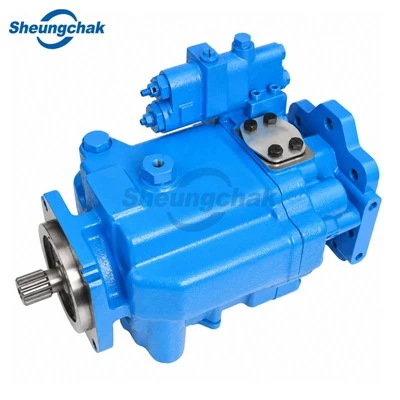
At the end of the day, the hydraulic pump is way more important than most people give it credit for. It’s the thing that turns a random hunk of metal into a powerful machine that can shape everything from car hoods to kitchen sinks. Whether you’re a hobbyist with a small garage press or a plant manager running a 100-ton production line, getting the right pump will make your press faster, stronger, and longer-lasting.
Orbital Motor If you need to replace your current pump for a hydraulic press, or you’re building a new press from scratch, don’t hesitate to reach out to us for a quote or to chat through what you need. We’ve got pumps for every type of press, from small hand-operated ones to large industrial units, and we can help you pick the right one for your specific job and budget. We don’t do pushy sales stuff—just honest advice, because we know a good pump means less downtime for you, which is what matters most.
References
- Hydraulic Pump Technology: Principles and Applications, 5th Edition. Vickers Inc.
- Fluid Power Systems Design Handbook, National Fluid Power Association.
- Pascal’s Principle and Hydraulics, NASA Glenn Research Center Educational Materials.
Guangdong Sheungchak Hydraulic Technology Co., Ltd.
Guangdong Sheungchak Hydraulic Technology Co., Ltd. is one of the most professional hydraulic pump manufacturers and suppliers in China. We are committed to providing high quality customized products with competitive price. Please rest assured to wholesale durable hydraulic pump for sale here and get pricelist from our factory.
Address: Building 25, Liantang Industrial City, Shangcun Community, Gongming Subdistrict, Guangming District, Shenzhen, China
E-mail: info@hydraulicsc.com
WebSite: https://www.hydraulicsc.com/
