Hey everyone, let’s cut to the chase — if you’ve been tinkering with off-grid ideas, or just looking to ditch utility companies to save cash, you’ve probably wondered: can home energy storage batteries actually power an entire house all on their own? As a home energy storage battery pack supplier, I get this question all the time from homeowners, contractors, even folks who just got solar panels and are confused about what’s next. Let’s break this down straight, no jargon, no sales fluff, just what actually works, what doesn’t, and how you can make it happen. Home Energy Storage Battery Pack
First, let’s get one non-negotiable fact out of the way off the bat: a typical 10kWh home battery (that’s the most common size people install right now) can’t power an entire house nonstop. Wait, before you throw your laptop, let’s talk numbers — because “entire house” means different things to different people. If your house is a 1-bed apartment with LED lights, a mini fridge, a laptop, and a smart TV? Yeah, a 10kWh unit will run that for 2-3 full days with no sun, no generator backup, no nothing. But if you have a 4-bed house with an electric water heater, a window AC unit for every room, an electric stove, and a washer/dryer? That same 10kWh battery will die in, like, 6 hours max. Energy use adds up fast, and that’s the big mistake most people make when they size their battery.
Let’s pull back the curtain on what your home actually uses in a day. Most US households use between 28kWh and 35kWh of electricity per day, according to the Energy Information Administration (EIA) — that’s about 1.2kWh to 1.5kWh an hour, on average. But that average is a lie for off-grid, because off-grid means you can’t draw extra power during peak times (like 2-5pm when everyone’s running AC) from the utility. If you go off-grid for good, you have to account for your peak hourly use, not your average. That’s why a lot of people underbuy — they see their monthly average and pick a battery that’s too small, then wonder why their power cuts out when they bake a Thanksgiving turkey and run the dishwasher at the same time.
Now, the good news: modern home energy storage batteries don’t have to be that puny 10kWh unit. We supply packs that go all the way up to 50kWh per unit, and you can stack them together too — run two 50kWh units, and that’s 100kWh total, enough for even a medium family’s full daily use, if you pair it with enough solar panels to charge it. Wait, hold on — I said “if,” and that’s the next big piece of the puzzle: you can’t have a fully off-grid home just with batteries. Batteries store power — they don’t make it. So unless you’re dropping 6 figures on a nuclear reactor (which, let’s be real, no one is doing for their suburban house), your battery system needs a charging source, and the most popular, affordable, and reliable one right now is rooftop solar.
Here’s how it works for off-grid: you install enough solar panels to cover your daily energy needs plus a buffer for cloudy, rainy weeks (that buffer is key — I’ll get to that in a sec) and connect them to a charge controller, which feeds power into your home battery bank. The battery bank acts like a buffer: it stores extra power from sunny days so you can use it when it’s dark, or when there’s a stretch of 3-5 overcast days, or when your peak use goes up (like the middle of summer when everyone’s AC is running).
Let’s do a real example, not a sales pitch. A friend of mine lives in a 3-bed house in Ohio, and he went fully off-grid last year. He runs an electric water heater, a 1-ton central AC, an electric dryer, all LED lights, a chest freezer, and a small electric car charger he only uses when power’s extra. His daily energy use is around 32kWh, which is right around the US average. He’s got 20 solar panels (that’s a 6kW system, for anyone who knows the lingo) and two of our 50kWh stacked batteries. That setup gives him 100kWh total storage — enough to cover his daily use three times over, plus a 2-3 week buffer for the rare cloudy, rainy stretch they get in the Midwest. So far, he hasn’t had to use a generator even once. That’s not a fluke — that’s how the math adds up.
But let’s talk about the caveats, because nothing is perfect, and I don’t want to sell you a dream that breaks after 6 months. First, batteries degrade over time. Every charge and discharge cycle wears down the battery’s capacity — most good lithium-ion home batteries (the type we supply) last 10-15 years, and by the end of that, they’ll hold about 80% of their original capacity. So a 100kWh battery stack will turn into 80kWh after 15 years, which is still enough for most homes, but you have to factor that into your initial sizing — don’t buy the smallest stack you think you’ll need, buy a little bigger to account for that wear and tear.
Second, if you live somewhere super remote with almost no sun, like the Pacific Northwest with its 200+ cloudy days a year? You’re going to need a bigger buffer. We’ve had customers in Oregon go off-grid with 120kWh of storage (three 40kWh units) and a backup generator just for the worst weeks — and that works, but it’s a bigger investment upfront. But even there, it’s doable.
Third, not all “whole house” claims are created equal. Some battery brands say they power a whole house, but they’re talking about reduced use — like, you have to turn off the AC and only use half your outlets. That’s not a whole house to me. We design our systems so you can run everything at normal use, no compromises, as long as you size your panels and batteries right.
Wait, let’s also clear up a common misconception: off-grid doesn’t mean you have to cut all ties with the utility forever. A lot of people go “grid-tied with battery backup” first — meaning you stay connected to the utility, use their power when your batteries are low, and sell excess solar power back to the grid when you have extra. That’s a great middle step if you’re not ready to go fully off-grid, and it works with our batteries too. But if your goal is 100% off-grid, you just need to shift how you size things.
Another thing I get asked all the time: what about the cost? Yeah, it’s not cheap. A full off-grid system with 100kWh of batteries and a 6kW solar setup will run you somewhere between $15,000 and $25,000, depending on where you live and how much you need. But over 10-15 years, that’s way cheaper than paying utility bills — the average US household pays around $1,500 a year for electricity, so that’s $15,000 just for 10 years of bills, which is about the same as the battery system, plus you get to own your power and avoid rate hikes. Plus, there are tax credits right now — the Inflation Reduction Act gives a 30% tax credit for home solar and battery systems, so that knicks a big chunk off the upfront cost.
Let me also tell you about a customer we had last year who came to us thinking a single 15kWh battery would power his whole house. He had a 5-bed house in Arizona, runs two AC units, an electric stove, and a pool pump — his daily use was 45kWh. That 15kWh battery would’ve died in like 3 hours, and he would’ve been stuck in the desert heat with no power. We talked him into a 100kWh stack and a 10kW solar system, and now he’s off-grid, never uses the utility, and his power bills (well, his system’s maintenance) are way less than what he was paying before. That’s the right way to do it — not guessing, not buying too small, not ignoring your actual use.
So to circle back to the original question: can home energy storage batteries power a whole house off grid? The answer is yes — if you do it right. That means:
- Calculate your actual daily and peak energy use, not the average someone else uses.
- Pair your batteries with enough solar (or another renewable source, like wind, if you’re in a windy area) to charge them.
- Size your battery stack big enough to cover your daily use plus a 2-3 day buffer, plus account for battery degradation over time.
- If you live in a very cloudy or remote area, add a small backup generator as a safety net, but even that’s optional if you size your system right.
Now, let’s be real — this isn’t a one-size-fits-all thing. If you’re a single person in a small apartment with low energy use, a 10kWh battery is more than enough. If you have a big family with high use, you need a bigger stack. The key is to work with someone who knows what they’re doing, not just a sales rep who’ll sell you the smallest unit to make a quick buck.

If you’re curious about sizing your own system, or want to learn more about our home energy storage battery packs — whether you’re looking to go fully off-grid, just add backup power for outages, or test the waters with a grid-tied system — reach out to us to discuss. We work with homeowners, contractors, and anyone else who wants to take control of their power, no pressure, no sales pitches, just straight answers.
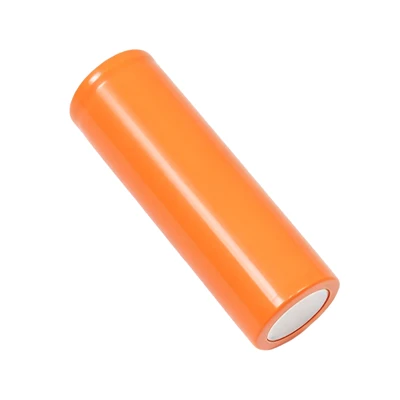
Cylindrical 32700 Lithium Battery References:
U.S. Energy Information Administration (EIA), "Residential Electricity Consumption by End Use," 2023
International Energy Agency (IEA), "Home Energy Storage Systems: Technology and Market Trends," 2022
Lithium-ion Battery Association, "Home Energy Storage Battery Lifespan and Degradation Rates," 2023
U.S. Department of Energy, "Off-Grid Home Energy Systems," 2024
Shandong Dingshengyuan Electronic Technology Development Co., Ltd.
As one of the most professional home energy storage battery pack manufacturers and suppliers in China, we’re featured by quality products and good service. Please rest assured to buy advanced home energy storage battery pack made in China here from our factory. Contact us for more details.
Address: Building 3, Shanhaitian Intelligent Manufacturing Industrial Park, No. 1639 Beihai Road, Liangcheng Subdistrict, Shanhaitian Tourist Resort, Rizhao City, Shandong Province
E-mail: DSY18663388293@outlook.com
WebSite: https://www.dsybattery.com/
