Hey there! As a supplier of Welding Wire Winding Machinery, I often get asked about the winding tension control method. So, I thought I’d share some insights on this topic. Welding Wire Winding Machinery
First off, let’s understand why winding tension control is so important. In the welding wire winding process, maintaining the right tension is crucial. If the tension is too high, the wire can break, which not only disrupts the production process but also leads to waste. On the other hand, if the tension is too low, the wire won’t be wound tightly enough, and it can get tangled or loose during storage or transportation.
There are several methods to control the winding tension in welding wire winding machinery, and I’ll go through the main ones here.
Mechanical Tension Control
One of the oldest and simplest methods is mechanical tension control. This method uses mechanical components like brakes, clutches, and springs to regulate the tension.
For example, a friction brake can be used to apply a certain amount of resistance to the wire spool. As the spool rotates, the brake creates a drag force, which increases the tension on the wire. The amount of tension can be adjusted by changing the pressure on the brake. It’s a straightforward and reliable method, but it has its limitations.
The main drawback of mechanical tension control is that it’s not very precise. The friction between the brake and the spool can change over time due to wear and tear, which can lead to inconsistent tension. Also, it’s difficult to make quick adjustments to the tension during the winding process.
Pneumatic Tension Control
Pneumatic tension control is another popular method. It uses compressed air to control the tension. A pneumatic brake or clutch is used to apply a force to the wire spool. The pressure of the compressed air can be adjusted to change the tension on the wire.
The advantage of pneumatic tension control is that it’s more precise than mechanical control. The air pressure can be easily adjusted, and it provides a more consistent tension. It’s also relatively easy to integrate into the winding machinery.
However, pneumatic systems require a source of compressed air, which can add to the cost and complexity of the machinery. There’s also a risk of air leaks, which can affect the performance of the system.
Electronic Tension Control
In recent years, electronic tension control has become increasingly popular. This method uses sensors and controllers to monitor and adjust the tension in real-time.
The sensors measure the tension on the wire, and the controller adjusts the speed of the winding motor or the force applied to the spool to maintain the desired tension. Electronic tension control offers high precision and can adapt to changes in the wire properties or the winding speed.
For example, if the wire diameter changes slightly, the electronic system can automatically adjust the tension to ensure a consistent winding. It also allows for more advanced control strategies, such as tension profiling, where the tension can be varied during the winding process.
The main drawback of electronic tension control is that it’s more expensive than mechanical or pneumatic methods. It also requires more technical expertise to install and maintain.
Hydraulic Tension Control
Hydraulic tension control is similar to pneumatic control, but it uses hydraulic fluid instead of compressed air. A hydraulic brake or clutch is used to apply a force to the wire spool.
The advantage of hydraulic tension control is that it can provide a high amount of force, which is useful for winding thick or heavy wires. It also offers good precision and can be easily adjusted.
However, hydraulic systems are more complex and expensive than pneumatic systems. They also require regular maintenance to prevent leaks and ensure proper operation.
Choosing the Right Tension Control Method
When choosing a tension control method for your welding wire winding machinery, there are several factors to consider.
The first factor is the type of wire you’re winding. Different wires have different properties, such as diameter, material, and flexibility. For example, thin and flexible wires may require a more precise tension control method, while thick and rigid wires may be able to tolerate a less precise method.
The second factor is the production volume. If you’re producing a large volume of wire, you may need a more automated and precise tension control method to ensure consistent quality. On the other hand, if you’re producing a small volume of wire, a simpler and less expensive method may be sufficient.
The third factor is the budget. Electronic tension control is the most expensive method, while mechanical tension control is the least expensive. You need to balance the cost with the performance requirements of your machinery.
Our Experience as a Supplier
At our company, we’ve worked with a variety of customers and have seen firsthand the importance of choosing the right tension control method. We offer welding wire winding machinery with different tension control options to meet the needs of our customers.
We’ve found that electronic tension control is becoming the preferred choice for many of our customers, especially those who require high precision and consistent quality. However, we also offer mechanical and pneumatic options for customers who have a lower budget or less demanding requirements.
We provide technical support and training to our customers to ensure that they can operate and maintain the tension control system effectively. We also offer after-sales service to address any issues that may arise.
Conclusion
In conclusion, winding tension control is a critical aspect of welding wire winding machinery. There are several methods available, each with its own advantages and disadvantages. The choice of method depends on factors such as the type of wire, production volume, and budget.
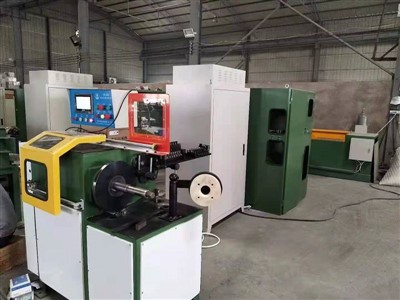
As a supplier of Welding Wire Winding Machinery, we’re committed to providing our customers with the best solutions for their needs. If you’re in the market for welding wire winding machinery or have any questions about tension control, don’t hesitate to reach out to us. We’d be happy to discuss your requirements and help you choose the right equipment.
Flux-Cored Wire Manufacturing Machine References
- "Welding Wire Winding Technology Handbook"
- "Tension Control in Industrial Winding Processes"
- Various industry research papers on welding wire winding machinery.
Three Water Machinery Co., Ltd.
Three Water Machinery Co., Ltd. is one of the most reliable manufacturers and suppliers of welding wire winding machinery in China. With abundant experience, we warmly welcome you to buy advanced equipment for sale here and get quotation from our factory. Contact us for more details.
Address: No.15, Jiaye Road, Liuanzhuang Industrial Park, Beichen District, Tianjin, China
E-mail: sales@eqet.com
WebSite: https://www.eqet.com/
