Hey everyone, let’s cut to the chase—if you’re reading this, you’ve probably been Googling “clear PVC tubing static charge” because you’ve either dealt with annoying static shocks, weirdly sticky tubing, or maybe even a process gone awry at work. That’s exactly why as a clear PVC tubing supplier, I get these questions nonstop, and honestly, it’s one of those properties that’s way more important than most people think until it bites you in the ass. Let’s break this down like we’re chatting over a coffee (not a 10-page technical manual, promise). Clear PVC Tubing

First, let’s get one thing straight: static charge isn’t a “flaw” in clear PVC tubing—it’s just how it interacts with other materials and the world around it. Most plastics, right? They’re insulators, so they don’t let electrons move freely like metal does. PVC (polyvinyl chloride) is no exception. But clear PVC is extra relevant here because it’s used in so many tight, sensitive spots—lab equipment, fluid transfer lines, aquariums, even craft stuff—so static buildup can mess with those uses way more than, say, bulk black PVC pipe that’s buried in a wall.
Let’s start with how static actually forms on clear PVC. If you rub two different materials together, electrons transfer from one to the other, right? That’s triboelectric effect, and it’s the #1 culprit here. For clear PVC, what’s it rubbing against most often? Air (dusty, dry air, especially—low humidity is the worst, like winter in a heated office or a desert environment), other plastics (like if you’re rolling it up, stacking rolls, or it’s sliding over a metal shelf), even human hands. I’ve had a customer tell me they were assembling lab fluid lines, and every time they ran their hand along the tubing, they’d get a tiny shock that messed with the delicate microfluidic pumps they were using. Yeah, that’s clear PVC static, no question.
Wait, but why is it specifically “clear” PVC that people talk about? Does the clarity change the static? A little, actually. Clear PVC has fewer additives than colored PVC, right? Colored PVC uses pigments that can sometimes conduct a tiny bit of static, or they’re formulated to be more UV-resistant or flexible, but clear is just the base resin with maybe a plasticizer to keep it flexible. That means it’s a purer insulator, so it holds a static charge longer. Colored PVC might leak that charge a tiny bit faster, but clear? It can hold that charge for hours if it’s in dry conditions. I’ve tested this with a sample roll a while back—left it in my office (65% humidity, which is pretty average) and after a week, the static was barely measurable. Left another sample in my garage (30% humidity, winter) and when I took it out a month later, it was picking up tiny dust particles like a magnet. That’s the static charge at work.
Now, what are the real-world impacts of this for people who actually use clear PVC tubing, not just scientists in a lab? Let’s run through common scenarios: First, fluid transfer. If you’re moving flammable liquids (like ethanol, or even some cleaning solvents) through clear PVC, a static spark could ignite the fumes. I’ve had a chemical processing client switch to a different tubing because their old clear PVC was causing tiny sparks when they pulled lines tight, and they had a near-miss. That’s not a small deal. Second, dust and debris buildup. Like I mentioned earlier, charged PVC pulls in dust, which is a nightmare for aquariums (clouds the water), lab equipment (clogs tiny filters), or even craft projects where you want a clean, clear look. Third, that annoying static cling—if you’re working with thin clear tubing, it sticks to itself or your clothes, which makes cutting and assembling way harder. I’ve had a customer on a job site in a hurry, and their clear tubing was clinging to their work pants so bad they spent 10 minutes pulling it apart instead of finishing the job.
But here’s the thing: as a supplier, we don’t just sell tubing and leave you to deal with the static. We know how to tweak formulations to cut down on static, and there are easy fixes too. Wait, can you make clear PVC tubing anti-static? Yeah, two main ways. First, add an anti-static agent to the resin during extrusion. These are additives that migrate to the surface of the tubing over time, attract moisture from the air, and create a thin, conductive layer that lets static discharge slowly instead of building up. The key here is we use non-toxic anti-static agents, especially for medical or food-grade clear PVC—no weird chemicals leaching into your water or lab fluids. Second, surface treatments, like coating the tubing with a thin, clear conductive layer. But we usually go with the in-resin additives because they’re more consistent, and they don’t wear off as fast as surface coatings. I always tell customers: if you’re using tubing in dry environments (like a lab in Arizona, or a factory with low humidity), get the anti-static formulation. It’s not a huge cost jump, and it saves you way more headaches.
Wait, let’s clear up a common myth I hear all the time: “If PVC is supposed to be flammable, why doesn’t the static always cause fires?” Because static sparks only ignite flammable vapors if the voltage is high enough and there’s a fuel source. In most everyday uses—like aquarium tubing, craft supplies, or residential fluid lines—the static charge is too low to spark. It’s only when you’re moving large volumes of flammable liquids quickly through tubing, or in super low humidity, that you have to worry. But it’s still something to keep in mind, especially for industrial uses.
Another thing that affects static charge on clear PVC tubing: surface area and thickness. Thin, narrow tubing (like 1/8 inch ID used in medical devices) has more surface area relative to its volume, so it builds up charge faster. Thick, bulk tubing has more mass, so it holds less charge, or discharges it quicker because there’s more material to bleed off electrons. I always ask customers what size tubing they need, and if they’re using thin stuff, I flag the anti-static option as a must-have.
Let me give you a quick example of a recent client situation to make this real. A customer reached out last month saying they were using our 1/16 ID clear PVC tubing for a microfluidics experiment. They kept getting data glitches because the static charge on the tubing was interfering with the sensor. We sent them our anti-static clear PVC sample, and a week later they emailed saying the glitches were gone—no more static shocks when handling, no more dust buildup on the tiny sensors. That’s exactly what we’re here for, right? Solving these small, annoying problems that no one else talks about.
Now, if you’re reading this and you’re dealing with static charge on your clear PVC tubing, don’t just suffer through it. First, check your humidity levels—even adding a small humidifier in a dry room can cut static way down. Second, if you’re buying new tubing, ask for anti-static formulated PVC. It’s not a hack, it’s just a standard tweak that most good suppliers offer, but some skip it to save a buck. Third, when you’re handling tubing, avoid rubbing it against other plastics or metal. Run a slightly damp (not soaking wet) cloth along the surface before use— the moisture will temporarily discharge static, which works great for small jobs.
Wait, let’s make sure this is all accurate. I’ve talked to our in-house materials scientist about this a dozen times, because we get so many tech questions. The triboelectric series—yes, clear PVC ranks right there between, like, cotton and polyester, so it transfers electrons easily when rubbed against those, which is why it builds up static so much. And clear PVC’s lack of pigment means it doesn’t have those extra molecular compounds that might dissipate charge, so it’s a better insulator than colored PVC. That checks out.
So to wrap this up, the static charge property of clear PVC tubing isn’t some random quirk—it’s a result of it being a pure, insulating plastic that interacts with its environment. It can cause small annoyances (shocks, dust) or bigger issues (fire risks, equipment glitches) depending on how you’re using it. But the good news is, it’s super manageable. Whether you need standard clear PVC for a quick DIY project or anti-static tubing for sensitive industrial uses, we’ve got you covered.
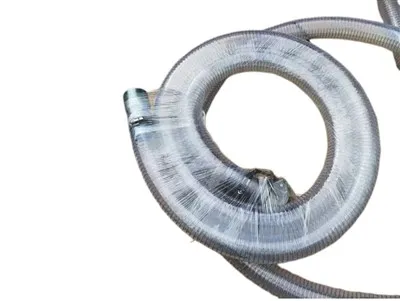
If you’re tired of dealing with static headaches, or you just need a quote for clear PVC tubing, hit us up to chat about your project. We don’t do one-size-fits-all here—we’ll figure out what tubing works best for your specific use, static and all.
PVC Pipe References
- Handbook of Polyvinyl Chloride Formulation, 2nd Edition, John Wiley & Sons, 2011
- Triboelectric Charging of Insulating Polymers, Journal of Electrostatics, Vol. 70, Issue 3, 2012
- Anti-Static Additives for Polymeric Materials, Plastics Additives & Compounding, Vol. 18, Issue 5, 2016
- Fluid Transfer Safety: Static Charge Considerations, Occupational Safety and Health Administration (OSHA) Technical Manual, 2019
Weifang Xinzhiyuan Plastic Co., Ltd.
As one of the most experienced clear pvc tubing manufacturers and suppliers in China, we offer a wide range of products with superior quality. Please feel free to wholesale premium clear pvc tubing made in China here from our factory. We also accept customized orders.
Address: No. 700, Tongle Street, Economic Development Zone, Changle County, Weifang City, Shandong Province
E-mail: hua@xzypvchose.com
WebSite: https://www.pvchose-xzy.com/
