If you’ve ever found yourself staring at a cat in a cage—whether it’s a shelter feline recovering from surgery, a senior cat with mobility issues, or a stray that needs a temporary safe space to heal—you’ve probably wondered: can cat diapers actually work for this scenario? As someone who’s spent the last eight years running a small, specialized business making and distributing cat diapers, this isn’t just a hypothetical question for me. I’ve talked to hundreds of shelters, vet clinics, and pet owners who’ve asked this exact thing, and the short answer is yes—but only if you’re approaching it the right way, and pairing it with common sense, cage-specific care that keeps your cat safe, comfortable, and healthy. Let’s break this down, because there’s a lot more to it than just slapping a diaper on a caged cat. Cat Diapers

First, let’s get one thing straight: not all cages are the same, and not all cats respond the same way to being in one. If your cat is in a small, bare wire cage for a 24-hour veterinary observation period, that’s way different than a spacious, multi-level foster cage with a blanket and a bed for a senior cat recovering from arthritis. I’ve seen people make the mistake of grabbing the first diaper off the shelf and shoving it on a cat in a tiny cage with no room to move, and that’s where problems start. As a supplier, I’d be lying if I said every diaper works for every cage scenario—so let’s talk about the core considerations that make cat diapers a viable (or not) solution for caged cats.
The biggest factor is cage size and enrichment. If a cat is in a cage smaller than 2ft x 3ft, they don’t have much room to walk, stretch, or adjust their position, which means a diaper that fits well on a free-roaming cat might rub raw spots on their hips, belly, or tail. I once got an email from a vet tech in a rural clinic who told me they’d been using generic puppy diapers on a post-operative cat in a small travel cage, and the cat ended up with a nasty diaper rash because the diaper wasn’t designed to contour to a cat’s body (and the cage didn’t let the cat shift away from the wet material quickly enough). That’s why, as a company, we make our cat diapers with three key features that are non-negotiable for cage use: low-profile leg cuffs that don’t bunch up, a soft inner liner that wicks moisture fast, and adjustable waist tabs so you can tighten or loosen the fit depending on how much space your cat has to move. If your cage is cramped, you’ll want to go for a size that’s slightly loose around the legs to prevent rubbing—even if it means checking it more often.
Next, why would you even need a cat diaper for a cage in the first place? Let’s list the valid, vet-approved reasons: post-surgery recovery (like neutering, spaying, or wound care, where vets restrict litter box access to prevent infection), senior cats with cognitive dysfunction that can’t make it to the litter box in time, cats with urinary incontinence or diarrhea, or strays in temporary foster cages who need to heal before being adopted. I’ve worked with dozens of shelters that use our diapers for sick or injured cats in quarantine cages, where letting a messy mess build up can spread bacteria to other animals or make the cat’s condition worse. The key here is that a diaper isn’t a “set it and forget it” solution—especially in a cage, where air circulation is often worse than in a home.
That brings me to the most important rule: change the diaper frequently. For a cat in a cage, I recommend checking the diaper every 2-4 hours, and changing it immediately if it’s wet or soiled. I’ve seen people make the mistake of putting a diaper on a caged cat in the morning and not touching it until bedtime, and that’s a surefire way to get urinary tract infections, skin irritation, or even pressure sores. Why? Because in a closed cage, the moisture can’t evaporate, and the material sits against your cat’s skin for hours. As someone who’s tested our diapers with shelter staff, we found that the wicking layer in our diapers can keep a cat dry for up to 6 hours, but only if the cage is well-ventilated. If your cage is in a small, stuffy room, you’ll need to change even more often—every 2 hours, tops.
Another big concern for caged cats: safety. Cats are curious creatures, and if their diapers aren’t fitted correctly, they can chew or paw at them, leading to blockages. I can’t tell you how many times I’ve gotten a frantic call from someone whose cat tried to pull their diaper off in a cage and ended up with a piece of the liner stuck in their throat or digestive tract. That’s why, when designing our diapers, we made sure to add a “chew-proof” outer layer that’s thicker than regular diapers, and we always include a guide for fitting: the waist should be snug enough that you can fit two fingers under it, and the leg cuffs should be folded over slightly to prevent gaps where the cat can get their paws. For cats that are extra curious, we also recommend adding a tiny bit of vet-approved tape (not too tight!) to the waist tab, just to make sure the diaper stays put, without restricting movement.
Wait, but what about litter boxes? Can you use a cat diaper and a litter box in a cage? For cats that are able to use the litter box, that’s actually a great combination—just make sure the diaper is only used when you can’t supervise them, or for short periods when they’re healing. For example, if a cat is recovering from a leg injury and can’t step into the litter box easily, a diaper will give them a safe place to go in the cage, but you should still put a litter box in the cage a few times a day to encourage them to use it, so they don’t forget how. I worked with a foster parent whose senior cat had arthritis and could only make it to the litter box once an hour; using a diaper in the cage overnight meant the foster parent didn’t have to wake up every time the cat had an accident, and the cat stayed clean and comfortable. Of course, you don’t want to rely on diapers long-term—once the cat is mobile again, phase them out gradually.
Now, let’s talk about what doesn’t work. Generic baby diapers or puppy diapers? Skip them. They’re made for different body shapes—baby diapers are too baggy around the legs for cats, and puppy diapers have absorbent cores that are too heavy and can chafe a cat’s delicate skin. That’s why we focus only on cat-specific diapers: we take measurements from hundreds of cat breeds, from tiny teacups to large Maine Coons, to make sure the fit is right. For caged cats, we even make a “low-profile” version that’s shorter in the belly, so it doesn’t get caught on cage bars or door hinges. I once had a customer tell me that they’d tried a generic brand for their post-surgery cat in a rescue cage, and the diaper caught on the bar and ripped, leaving the cat exposed for hours. That’s the kind of problem we designed our low-profile model to prevent.
Another thing to consider: cage hygiene. If you’re using a diaper, you still need to clean the cage regularly—even if the diaper is doing its job. Urine and feces can seep through the diaper onto the cage floor, especially if it’s not changed often, and that can lead to bacteria buildup, which is bad for the cat’s health (and anyone else coming into contact with the cage). As part of our customer care, we always include a free cage cleaning guide for people using our diapers for caged cats: wipe down the cage with a pet-safe disinfectant every time you change the diaper, and line the cage floor with a waterproof mat that’s easy to wipe up spills. That way, you’re not just relying on the diaper to keep the cage clean—you’re taking a holistic approach.
I want to be clear: I’m not saying cat diapers are the only solution for caged cats. They’re a tool, and like any tool, they work best when used correctly. For example, if your cat is in a cage for more than a few days, you should aim to give them at least 10 minutes of out-of-cage time twice a day, if possible, to stretch their legs, use the litter box normally, and avoid boredom. Diapers are a short-term fix, not a long-term solution for confinement. I’ve heard of people using diapers for months on a caged cat, and that’s when you start seeing issues: muscle atrophy, behavioral problems from lack of movement, and skin irritation from prolonged diaper use.
Let me share a real story that sticks with me. A few years ago, a vet clinic contacted us about a 3-year-old stray cat named Mango who’d been hit by a car, leaving her with a broken pelvis that kept her in a small recovery cage for 6 weeks. The clinic had tried everything: puppy diapers, baby diapers, even homemade pads, but Mango was chafing so badly that she wouldn’t eat or drink. They ordered our medium-sized cat diapers, and adjusted the fit to be extra loose around her hips so she could move as much as possible. Within a few days, the rash cleared up, and Mango was able to use the diaper without pawing at it. By the end of her recovery, she was using the litter box once her pelvis healed, but those diapers had gotten her through the hardest part. That’s the kind of difference a well-fitting, cat-specific diaper can make for a caged cat.
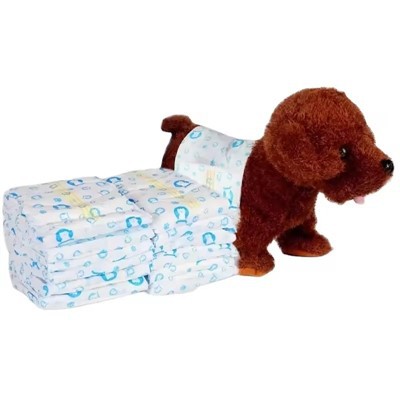
If you’re considering using cat diapers for a cat in a cage, here’s a quick checklist to make sure you’re doing it right: 1) Measure your cat’s waist and girth, don’t guess—cat sizes vary a lot, even within the same breed. 2) Choose a low-profile, cat-specific diaper, not a generic brand. 3) Check and change the diaper every 2-4 hours, more often if the cage is small or stuffy. 4) Keep the cage well-ventilated and clean, wiping it down every time you change the diaper. 5) Make sure the fit is snug but not tight—you should be able to fit two fingers under the waist and leg cuffs. 6) Don’t use diapers long-term; phase them out once your cat can move and use the litter box normally.
Adult Care At the end of the day, the goal is to keep your cat healthy, comfortable, and safe, whether they’re in a cage or roaming free. As a cat diaper supplier, I’ve spent years refining our products to meet the unique needs of cats in every scenario, including cages. If you’re a shelter, vet clinic, foster parent, or pet owner looking for diapers tailored for caged cats, we’re here to help you find the right fit and get you set up with everything you need to care for your cat during their recovery or confinement. We offer bulk pricing for shelters and clinics, as well as flexible sizing for all cat breeds and ages. For more information, or to discuss your specific needs for caged cat care, don’t hesitate to reach out to our team to arrange a procurement consultation.
References
- American Association of Feline Practitioners. (2021). Feline Post-Operative Care Guidelines.
- International Society of Feline Medicine. (2022). Guidelines for Managing Incontinence in Cats.
- Journal of Feline Medicine and Surgery. (2020). Confinement-Related Health Risks in Caged Domestic Cats.
- Shelter Medicine Association of North America. (2021). Best Practices for Diaper Use in Shelter Cats.
Shenzhen Lechen Sanitary Products Co., Ltd.
As one of the most experienced cat diapers manufacturers and suppliers in China, we also support customized service with low price. We warmly welcome you to buy cheap cat diapers made in China here from our factory. For free sample, contact us now.
Address:
E-mail: gina@lechenpersonalcare.com
WebSite: https://www.lechenpersonalcare.com/
