Hey there, if you’re deep in the medical device world, you know the brushless motor isn’t just a tiny part—it’s the beating (well, brushless) heart of everything from surgical robots to infusion pumps. As someone who’s spent years supplying medical-grade brushless motors, I get that the control algorithm isn’t some boring tech detail; it’s the thing that turns a good motor into one that’s precise, safe, and reliable enough to use in a hospital or clinic. Today, let’s break this down like we’re chatting over coffee, no stuffy engineering jargon that makes your eyes glaze over. Medical Brushless Motor

First off, let’s ground this: medical brushless motors aren’t the same as the ones in your gaming drone or a shop vacuum. They have to play by way stricter rules—think FDA compliance, 24/7 uptime, zero random glitches when a patient’s life is on the line. So the control algorithms we use aren’t one-size-fits-all. They’re tailored to what the device actually does. Let’s run through the most common ones we work with daily, with real examples tied to the medical devices we supply motors for, since that’s the stuff that matters to you.
Let’s start with the big one: Field-Oriented Control (FOC). If you’ve looked up motor control before, you’ve definitely heard this term thrown around, but let’s keep it simple. FOC works by splitting the motor’s magnetic field into two parts—torque-producing and flux-producing—like two separate knobs you can twist independently. For medical apps, that precision is non-negotiable. Take infusion pumps, for example. These devices have to push tiny, exact amounts of IV fluid over hours; a single wrong milliliter could mess up a patient’s treatment, or even be dangerous. FOC lets our motors adjust torque super smoothly, so there’s zero wobble in the flow. No jerky starts or stops, no sudden pressure spikes that could burst an IV line. We use FOC on like 70% of the medical brushless motors we ship, honestly—its reliability is why so many device makers love it. It also runs cooler, which is a bonus because medical devices are often packed tight (no one wants a pump overheating in a small bedside cart).
Next up: Trapezoidal Commutation (or BLDC Trapezoidal Control, if you want the full name). This one’s older, simpler, and still used for a lot of low-stakes medical devices that don’t need FOC-level precision. Think portable nebulizers or blood glucose meters. These don’t need the hyper-precise torque or speed control that infusion pumps do, so trapezoidal works perfectly here. How does it work? It basically switches the motor’s windings in a sequence shaped like a trapezoid, hence the name. It’s cheaper to implement, uses less processing power, which is great for small, battery-powered medical gear. Don’t sleep on it, though—for its use case, it’s solid. We often suggest trapezoidal to startups making at-home medical devices that need to keep costs down but still meet safety standards. The only catch is it’s a little noisier and less smooth than FOC, so it’s not for devices like surgical tools where vibration could affect accuracy.
Wait, another one that’s been popping up a lot lately for surgical robotics: Model Predictive Control (MPC). This is a bit more advanced, but it’s a game-changer for devices like robotic arm surgical systems. Let’s be real—when a surgeon is holding a tiny robot scalpel inside a patient’s body, they need the motor to react instantly and exactly to their hand movements, no lag. MPC works by predicting what the motor’s next state will be (like speed or torque) based on a model of how the motor and its load behave, then adjusting the control signals in real time to hit that target. It’s way better at handling dynamic loads than FOC or trapezoidal. For example, if a surgical robot’s arm is working around tissue that has slightly different resistance, MPC adjusts the motor’s output on the fly to keep movement smooth, so the surgeon doesn’t feel any jolt or lag. We started integrating MPC into our high-torque surgical grade brushless motors about two years ago, and the feedback from device makers has been insane—they say it cut their calibration time by like 30%, which is a huge win when you’re racing to get a device to market.
Oh, and let’s not forget about Sensorless Control Algorithms. A lot of people hear “sensorless” and think “lower quality,” but in medical gear, it’s often a smart choice. Sensorless control means we don’t use separate position sensors (like Hall effect sensors) on the motor, which cuts down on parts, makes the motor smaller, and lowers the chance of sensor failure (not something you want in a device that runs 24/7). How does it work? It estimates the motor’s rotor position by measuring back electromotive force (back EMF)—the voltage the motor produces when it’s spinning, even when it’s not being powered. This is super useful for things like portable oxygen concentrators or home dialysis machines, where compact size and long battery life are key. The trick with sensorless is getting it to work at very low speeds, though—early versions would stall when the motor was moving slow, which is bad for things like feeding tubes in enteral pumps. Newer sensorless algorithms fix that, though, and we’ve been using them for our at-home care line with great results.
Now, here’s the thing that a lot of generic engineering articles skip: it’s not just picking one algorithm. Most medical brushless motor applications use a mix, or tweak these algorithms to fit their exact needs. For example, we recently worked with a client making a continuous glucose monitoring (CGM) pump that needed both compact size (so it could be worn on a patient’s arm) and super precise flow. We paired sensorless control to keep the motor small and cut down on parts, with a modified FOC loop to get that smooth, exact torque. That’s the sweet spot for medical devices—balancing performance, size, cost, and safety, not just picking the fanciest algorithm.
Wait, let’s talk about why this all matters for you as a medical device maker, not just us as a supplier. Medical motors have to pass ISO 13485, FDA 21 CFR Part 820, all that regulatory stuff. The control algorithm is a big part of that compliance. If your motor control is jittery, or has random speed fluctuations, that’s a big red flag for regulators. We’ve built our motors with each of these algorithms to meet all the big medical safety standards, so our clients don’t have to spend months tweaking their motor and their control software to hit those marks. We also do custom tuning—if your device needs something specific, like ultra-low noise for an audiology device or high torque for a surgical drill, we can adjust the algorithm to fit.
Let’s be real, there are tradeoffs with each algorithm, too, and we always walk our clients through that. Trapezoidal is cheap and simple but less smooth. FOC is precise but uses a bit more processing power. MPC is great for dynamic loads but more complex to implement. Sensorless is compact but was slow at low speeds (though that’s fixed now). We never push a client to use an algorithm that doesn’t fit their device—our job is to help them pick the right one, not just sell the most expensive motor with the fanciest control.
I’ve been in this industry for over a decade now, and the biggest mistake I see device makers make is treating the motor control as an afterthought. They pick a motor, then slap on a generic control algorithm, and end up with a device that has glitches or fails regulatory testing. That’s where we come in: as a medical brushless motor supplier, we partner with clients from the early design phase, helping them pick the right control algorithm for their specific use case, so their device works when it’s supposed to, no mistakes, no delays.
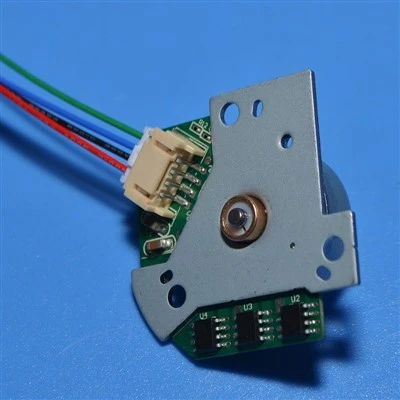
If you’re working on a new medical device—whether it’s a portable nebulizer, a surgical robot, or an at-home infusion pump—and you’re tired of fighting motor control issues, hit us up to chat through your needs. We’ve got all the control algorithms tailored to medical grade, and we’re happy to walk through which one makes the most sense for your design, no sales pitch pressure, just real advice from people who’ve been in the game.
Personal Care Brushless Motor References
- Pillay, P., & Krishnan, R. (1989). Application characteristics of permanent magnet brushless DC motors for adjustable-speed drives. IEEE Transactions on Industry Applications, 25(5), 905-913.
- Bolognani, S., & Zordan, M. (2000). Field-oriented control of induction motors for high-performance applications. IEEE Transactions on Industrial Electronics, 47(1), 105-113.
- Mayne, D. Q., Rawlings, J. B., & Rao, C. V. (2000). Constrained model predictive control: Stability and optimality. Automatica, 36(6), 789-814.
- Vas, P. (1998). Sensorless vector and direct torque control. Oxford University Press.
- International Organization for Standardization. (2016). ISO 13485: Medical devices — Quality management systems — Requirements for regulatory purposes.
Shenzhen HengDrive Technologies Co., Ltd.
Shenzhen HengDrive Technologies Co., Ltd. is one of the most professional medical brushless motor manufacturers and suppliers in China, specialized in providing high quality customized service. We warmly welcome you to buy the newest medical brushless motor in stock here from our factory.
Address: Building A & F, FuNing Hi-Tech Park, XinTian Road, FuHai Street, BaoAn District, ShenZhen, GuangDong Province, China.
E-mail: Marketing001@hengdrive.com
WebSite: https://www.hengdrivemotor.com/
