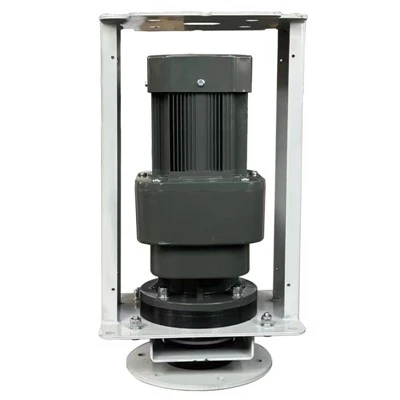
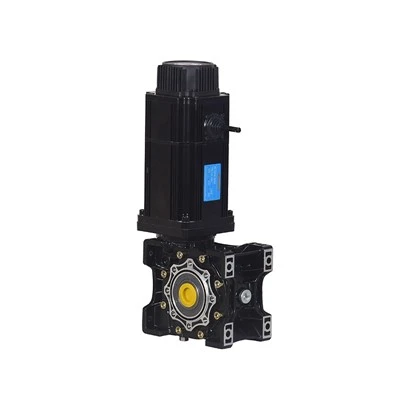
If you’ve ever stood in a loading bay at 2 a.m. watching an industrial door stutter open and close, or waited for a warehouse to clear because a gearmotor’s coupling just failed mid-cycle, you know how small parts make big problems. As a supplier focused entirely on industrial door geared motors, I’ve spent the last 12 years troubleshooting exactly this: I’ve fielded calls from plant managers in Detroit whose door coupling wore out after six months, and from logistics teams in Houston whose cold-storage doors froze shut because they picked a coupling rated for room temperature. Industrial door geared motors aren’t like the small gear motors on your backyard gate—they cycle thousands of times a day, handle massive weight (some doors weigh 1,000+ lbs), and face extreme conditions: freezing cold, rain, dust, chemical fumes, and even occasional collisions with a forklift. The coupling, that unassuming part connecting the motor to the door’s drive shaft, is the unsung hero here. Get it wrong, and you’re looking at downtime that costs $1,000+ per hour for a distribution center. Get it right, and you’ll double your motor’s lifespan and cut maintenance costs by 30% or more. Let’s break down how to choose the right coupling, the mistakes I see every customer make, and what works for the most common industrial door scenarios I’ve encountered. Industrial Door Geared Motor
First, start with the basics, but don’t skip them. You don’t need an engineering degree to nail the first step, but you do need the right specs from your existing system (or a clear plan for a new one). When a customer calls me for a coupling, the first thing I ask isn’t “what’s your budget?”—it’s two numbers: torque and cycle count. Torque is the twisting force the motor needs to move the door, and it’s non-negotiable. If your motor is rated for 50 Nm of torque, buying a coupling rated for 40 Nm is a ticking time bomb. That said, I see people mix up “peak torque” and “running torque” all the time. Running torque is the steady force needed to keep the door moving (like when it’s halfway up), while peak torque is the sudden surge when the door starts moving, or if it hits an obstruction. For example, a sectional door that’s 12 ft wide and 10 ft tall will have a peak torque of 2–3x its running torque, because it has to lift all the panels at once against gravity. I always recommend sizing your coupling for peak torque, not just running—cutting corners here means you’ll replace the coupling every 6 months instead of every 5 years. The other non-negotiable spec is cycle count. Industrial doors aren’t residential gates that open a few times a day; a warehouse door might cycle 500 times a day during peak shipping season, which adds up to 180,000 cycles a year. Some couplings are built for low-cycle applications (under 10,000 cycles, like a small garage door), while others are rated for 1 million+ cycles for heavy-duty dock doors. If you buy a low-cycle coupling for a high-traffic loading bay, it’ll crack within a month. That’s a mistake I made early in my career—when we took on a big retail client, we fitted their distribution doors with cheap couplings we used for smaller projects, and they failed 3 times in the first quarter. We had to reverse the fix, and I’ve never undersized a coupling for cycle count since.
Next, match the coupling type to your door’s use case and environment, because not all couplings are created equal. Let’s go over the four most common types we supply, and when each works best. First, the rigid coupling. This is the simplest, made of two metal halves bolted directly to the motor and shaft, with no give. It’s cheap, it’s durable, and it’s perfect for applications where there’s zero misalignment between the motor and shaft—like large, overhead rolling doors in a climate-controlled warehouse where installers can perfectly line up every part. The downside? If there’s even a tiny bit of misalignment (which happens all the time after months of vibration, or if a forklift hits the door), rigid couplings will wear the motor or shaft prematurely, or even break the drive gear. I only recommend rigid couplings for low-vibration, precision-aligned applications, and even then, I add a note to the order to have installers double-check alignment. Second, the jaw coupling. This is the workhorse of industrial door geared motors, and it’s the one we sell most of. Jaw couplings have two metal hub halves with curved jaws, connected by a rubber or polyurethane “spider” in between. The spider absorbs small amounts of misalignment, dampens vibration, and cushions peak torque spikes—exactly what you need for doors that cycle thousands of times a day and face occasional obstructions. The spider is also replaceable, which means if it wears out (usually after 2–5 years, depending on conditions), you don’t have to replace the whole coupling—just the $10 part. That saves customers hundreds in maintenance costs. The catch with jaw couplings is the spider material: polyurethane is more durable and works better in warm environments, while rubber stays flexible in cold weather (temperatures below 32°F, where polyurethane can get brittle and crack). I had a customer in Minnesota a few years ago who used polyurethane spiders for their outdoor dock doors, and within a winter, the cold made them shatter. Switched to rubber spiders, and they haven’t had a problem since. Third, the gear coupling. If you have an ultra-heavy-duty door—like a 2,000-lb hangar door or a high-traffic distribution center door that cycles 1,000+ times a day—gear couplings are the way to go. They have two toothed hubs that mesh with each other, with a lubricated housing around them, which means they can handle very high torque and huge amounts of misalignment (up to a few degrees, which is common in old door systems). The downside? They’re more expensive, require regular lubrication, and are bulkier, so they’re not ideal for small motor setups. I reserve gear couplings for doors that see serious use, where the cost of downtime justifies the upfront expense. Fourth, the beam coupling. This is a lightweight, flexible coupling made of a single piece of metal (usually aluminum) shaped like a spiral. It’s great for small, high-speed doors, like the fast-acting doors used in food processing plants that open in 2 seconds to keep cold air in. The downside is they can’t handle high torque or heavy loads, so I never use them for standard sectional doors or rolling doors. If a customer tells me their door is a fast-action type, I steer them straight to beam couplings—any other type would be too slow or too weak.
Now, the part that most customers overlook: environmental factors. Even if you get torque and cycle count right, if your coupling can’t handle your site’s conditions, it will fail. Let’s run through the most common environments I deal with. Outdoor docks and loading bays are exposed to rain, snow, salt (in coastal areas), and extreme temperatures. I always recommend corrosion-resistant materials here: steel couplings are fine for mild climates, but for coastal sites, switch to stainless steel or zinc-plated steel to prevent rust. For cold climates (below 0°F, like northern Canada or Alaska), rubber jaw coupling spiders are a must, as polyurethane gets brittle. For hot, arid climates (like Arizona or Texas), polyurethane spiders hold up better, but you need to make sure the coupling is rated for high temperatures—some cheap couplings can soften or melt in 120°F heat. Then there’s industrial environments with dust, chemical fumes, or food processing facilities. If you’re in a brewery or a meat processing plant, you need couplings that are easy to clean, resistant to food-grade chemicals, and won’t shed particles that contaminate products. We offer sealed jaw couplings for these sites—they keep out dust and moisture, so the spider stays clean and lasts longer. I once had a customer in a pharmaceutical plant who used an open jaw coupling, and dust from their manufacturing process built up in the spider, causing it to wear unevenly every 3 months. Switched to sealed couplings, and the problem went away entirely. Another environmental factor is vibration. If your door is in an area with constant vibration—like near a shipping dock where forklifts are driving all day—you need couplings that absorb vibration well. Jaw couplings are great here, because the spider acts as a shock absorber; gear couplings can vibrate more if not lubricated properly. I always test a sample coupling at 2x the site’s vibration level before I recommend it for these applications, just to be sure.
Now, the common mistakes I see customers make every time, and how to avoid them. First, overbuying or underbuying. Some customers think “bigger is better” and buy a coupling rated for twice the torque they need, which adds unnecessary cost. Others cut corners and buy a coupling rated for lower torque to save $20, which leads to premature failure. The sweet spot is matching the coupling’s rating exactly to your peak torque and cycle count, with a small 10–15% buffer for unexpected loads (like a forklift hitting the door). Second, ignoring misalignment. Even if you pick the best coupling on paper, if the motor and shaft are misaligned, it will fail. I tell every customer: when installing a new coupling, spend 15 minutes checking alignment with a dial indicator—even a 0.5 mm misalignment will wear a coupling out in a few months. Third, skipping maintenance. A coupling isn’t a set-it-and-forget-it part. For jaw couplings, inspect the spider every 6 months for cracks or wear; replace it if it’s more than 10% worn. For gear couplings, lubricate them every year according to the manufacturer’s instructions. I had a customer in Chicago who forgot to lubricate their gear coupling for 3 years, and it seized up, breaking the motor and the door’s drive shaft—cost them $5,000 in repairs. That’s a mistake that’s completely avoidable with a simple maintenance schedule. Fourth, mixing and matching parts from different brands. Some customers buy a generic coupling from a hardware store to save money, only to find it doesn’t fit their geared motor’s shaft, or isn’t rated for the torque. As a supplier, I can’t stress this enough: couplings are not universal. A coupling that fits a 1 HP motor might not fit a 1.5 HP motor, even if the shaft size is the same. Always use a coupling designed specifically for your industrial door geared motor model—we keep spec sheets for every motor we sell, so I can match the right coupling to the exact motor in minutes.
Let’s wrap this up with a real example, from a customer I worked with last year to make this concrete. A regional logistics company in Atlanta called me with a problem: their 12 loading dock doors were failing every 8–10 months, leading to 2–3 hours of downtime per door every time. They’d been buying generic jaw couplings from a local industrial supply store, paying $15 per coupling, and replacing them twice a year. I asked for their specs: each door had a 2 HP geared motor, peak torque of 65 Nm, and 500 cycles per day. Their original couplings were rated for 50 Nm, with 100,000 cycles. That was their first mistake—undersizing torque and cycle count. Second, they were using polyurethane spiders, which get brittle in Atlanta’s hot summers (temperatures regularly hit 95°F in the summer, which is above the recommended limit for standard polyurethane). I recommended: a jaw coupling rated for 75 Nm (the 15% buffer) and 500,000 cycles, with high-temperature polyurethane spiders, zinc-plated steel hubs to resist humidity and dust. The total cost for the couplings was $45 each, three times what they were paying, but their maintenance costs dropped by 80%—they haven’t replaced a coupling in 18 months, and their downtime is down to 30 minutes per door a year, if that. That’s the difference between choosing the right coupling and guessing.
At the end of the day, the right coupling for your industrial door geared motor isn’t the cheapest one, or the fanciest one—it’s the one that matches your motor’s torque, your door’s cycle count, and your site’s conditions. I’ve been in this business long enough to know that every site is different: a cold-storage door in Canada needs a different coupling than a food processing door in California, which needs a different coupling than a hangar door in Texas. The worst thing you can do is assume one size fits all. If you’re in the market for a new coupling, or you’re troubleshooting repeated failures with your current one, don’t guess. Reach out to our team, and we’ll walk you through the specs, the environment, and the right solution for your setup. We don’t sell one-size-fits-all parts—we build couplings for industrial door geared motors that work for your specific operations, because we know downtime costs you money, and the right coupling is the easiest way to cut those costs. After all, I started this business because I saw too many customers lose money over a part that costs $50 or less. That’s a problem I’m here to solve.
Stretch Wrapper Control System Reference:
- Machinery’s Handbook, 31st Edition, Industrial Press Inc., 2020.
- Coupling Selection and Application Guide, Power Transmission Distributors Association (PTDA), 2022.
- “Performance Characteristics of Flexible Couplings for Industrial Door Applications”, Journal of Industrial Maintenance and Automation, Vol. 17, No. 2, 2021.
- Food-Grade Power Transmission Components: Standards and Best Practices, National Food Safety Foundation, 2023.
Wuxi Rstar Electric Co., Ltd.
With abundant experience, we are one of the most professional industrial door geared motor manufacturers and suppliers in China. Welcome to wholesale bulk customized industrial door geared motor at competitive price from our factory. If you have any enquiry about quotation, please feel free to email us.
Address: 9th Floor, Building 9, Shengfeng Lianzhi Valley, No.67 Zhujiang Road, Xinwu District, Wuxi City
E-mail: rstarbz@163.com
WebSite: https://www.rstar-wx.com/
